Accommodations and lodges
Choosing where to stay during your travels can feel overwhelming. Your accommodation isn’t just a place to sleep—it’s your temporary home base, your retreat after long days of exploration, and often a significant part of your travel budget. The right lodging can elevate an ordinary trip into an unforgettable experience, while a poor choice can cast a shadow over even the most exciting destination.
The landscape of travel accommodations has transformed dramatically. Beyond traditional hotels, travelers now navigate a rich ecosystem of options: boutique lodges tucked into remote wilderness, urban hostels fostering community connections, vacation rentals offering the comforts of home, and everything in between. Each type serves different needs, preferences, and travel styles. This comprehensive resource will help you understand the full spectrum of accommodation options, identify what matters most for your specific journey, and make informed decisions that align with both your budget and your expectations.
Understanding Different Types of Travel Accommodations
Think of accommodations as existing on a spectrum, where one end offers standardized comfort and predictability, while the other provides unique character and personalized experiences. Neither end is superior—your ideal choice depends entirely on your travel purpose and personal preferences.
Traditional Hotels and Resorts
Hotels remain the cornerstone of travel accommodations for good reason. They offer reliability, consistent service standards, and amenities that most travelers expect. A three-star hotel typically provides clean rooms, daily housekeeping, and basic facilities, while luxury properties elevate the experience with concierge services, fine dining, and premium amenities. Resorts take this further by creating self-contained destinations where guests can access multiple restaurants, recreational activities, and entertainment without leaving the property.
Alternative Lodging Options
The rise of sharing economy platforms has democratized travel accommodation. Vacation rentals—entire apartments or houses—appeal to families and groups seeking space, kitchen facilities, and a residential neighborhood experience. Hostels have evolved far beyond their backpacker-only reputation, with many now offering private rooms alongside dormitories, creating social spaces that facilitate connections between solo travelers.
Boutique lodges and bed-and-breakfasts occupy a special niche, typically featuring fewer than 20 rooms, distinctive design aesthetics, and owners who actively engage with guests. These properties trade standardization for personality, offering authentic local experiences that chain hotels cannot replicate.
How to Choose the Right Accommodation for Your Journey
Selecting accommodation is not unlike assembling a puzzle—multiple pieces must fit together to create a satisfying picture. Your choice should reflect the nature of your trip, not abstract ideals about the « best » type of lodging.
Start by honestly assessing your travel purpose. Business travelers requiring reliable wifi, work desks, and proximity to commercial districts have different needs than adventure seekers who view their lodge merely as a launchpad for outdoor activities. A romantic getaway demands different considerations than a family vacation with young children.
Consider your daily rhythm. Will you spend most daylight hours exploring, returning only to sleep? A basic, well-located hotel might suffice. Planning leisurely mornings and afternoon breaks? Prioritize comfortable common areas, perhaps a balcony or patio, and quality coffee service.
Your travel companions significantly influence the equation. Solo travelers might embrace hostel environments for social interaction, while couples often prefer privacy. Groups of friends might find vacation rentals more economical and conducive to quality time than booking multiple hotel rooms.
Location and Accessibility Considerations
Real estate wisdom applies equally to accommodations: location matters tremendously. A beautiful lodge in the wrong location can undermine your entire trip, while a modest property in an ideal spot enhances every moment.
Evaluate proximity to your priorities. Are you visiting for specific attractions, conferences, or events? Calculate actual travel time, not just distance. A property three miles from a city center might mean ten minutes by subway or forty-five minutes in traffic, depending on infrastructure and timing.
Consider the neighborhood character beyond tourist maps. Research whether the area feels safe and comfortable during evening hours when you’ll likely return from dinner or entertainment. Local forums and recent guest reviews often reveal insights that official descriptions omit. A central location might mean street noise, while suburban tranquility could mean limited dining options within walking distance.
Transportation accessibility deserves careful attention. Properties near public transit stations offer freedom and cost savings in cities where parking is expensive or traffic is challenging. Conversely, remote lodges require rental vehicles but reward you with natural surroundings and peaceful environments.
Balancing Budget and Value
Price and value are related but distinct concepts. The least expensive option rarely provides the best value, while the most expensive doesn’t guarantee satisfaction. Think of your accommodation budget as an investment requiring strategic allocation.
Accommodation costs typically follow seasonal patterns. Beach destinations peak during summer months and school holidays, while ski lodges command premium rates in winter. Urban hotels often reduce rates on weekends when business travelers disappear, creating opportunities for leisure visitors. Understanding these rhythms allows you to optimize timing or adjust expectations.
Consider the total cost equation beyond the nightly rate. A hotel including breakfast might cost more initially but save money compared to daily restaurant meals. Properties with kitchenettes enable grocery shopping instead of constant dining out—particularly valuable for extended stays. Conversely, resort fees, parking charges, and wifi surcharges can inflate seemingly attractive base rates.
Loyalty programs and direct booking incentives reward planning. Many hotel chains offer free membership programs providing room upgrades, late checkout, or complimentary amenities. Booking directly through property websites often yields lower rates than third-party platforms, along with more flexible cancellation policies.
Essential Amenities That Enhance Your Stay
Amenities transform accommodations from purely functional to genuinely comfortable. Identifying which features matter to you personally prevents both overpaying for unused perks and regretting missing essentials.
Certain amenities have become baseline expectations for most travelers: reliable wifi connectivity, climate control, hot water, and secure locks. Beyond these fundamentals, prioritize based on your specific needs:
- Kitchen facilities matter significantly for extended stays, travelers with dietary restrictions, or families with young children
- Fitness centers and pools appeal to wellness-focused travelers and provide entertainment for children
- Laundry access becomes crucial for trips exceeding one week, reducing luggage requirements
- Work-friendly spaces including desks, ergonomic chairs, and multiple outlets serve remote workers and business travelers
- Pet policies determine feasibility for travelers unwilling to board their animals
Read amenity descriptions carefully—terminology can mislead. « Ocean view » might mean glimpsing water from a specific corner of your balcony, while « near beach access » could involve a fifteen-minute walk. Recent guest photos often reveal reality more accurately than professional marketing images.
Choosing your accommodation thoughtfully sets the foundation for travel success. By understanding the spectrum of options available, aligning your selection with your trip’s specific purpose, carefully evaluating location trade-offs, strategically managing your budget, and identifying truly valuable amenities, you transform lodging from a logistical necessity into an integral component of your journey. The perfect accommodation for your needs exists—finding it simply requires knowing what questions to ask and which factors genuinely matter to you.
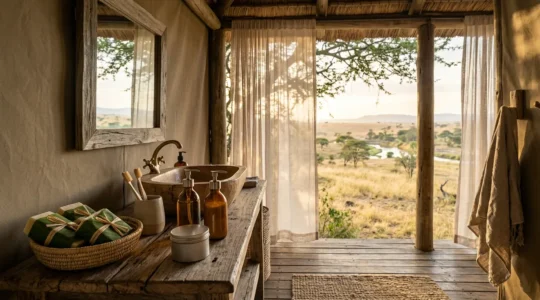
How Do Plastic-Free Camps Handle Amenities Like Shampoo and Toothpaste?
In summary: True eco-lodges replace single-use plastics not with sacrifice, but with sophisticated, in-house systems like water bottling plants and reverse osmosis purification. Amenities like shampoo and soap are provided in high-quality, refillable ceramic or glass dispensers, often featuring locally…
Lire la suite
How to Tell if an « Eco-Lodge » Is Truly Sustainable or Just Greenwashing?
Genuine eco-lodges are defined not by visible solar panels, but by the verifiable integrity of their hidden operational systems. Energy sovereignty is tested by grid capacity (the ‘hairdryer test’), not just panel count. Water and waste cycles must be closed-loop…
Lire la suite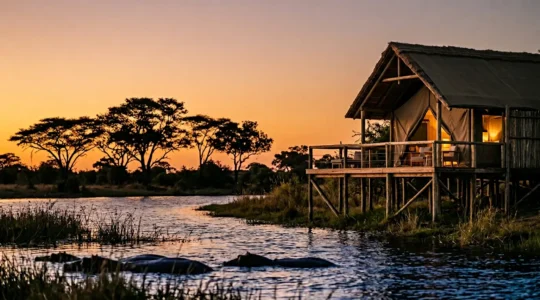
Embracing the Wild: Why a Riverfront Suite is Safer and More Magical Than You Think
A riverfront suite isn’t about embracing risk; it’s about experiencing engineered safety that fundamentally enhances your connection to the wild. Architectural intelligence, using elevation and strategic orientation, provides a secure and private buffer from wildlife without sacrificing the view. Understanding…
Lire la suite
Is Sleeping in a Star Bed in the Middle of the Bush Safe from Lions?
Yes, it’s perfectly safe from lions, but the real challenge is managing your own fear to fully embrace the thrill. Safety in the bush isn’t a matter of luck; it’s a sophisticated, multi-layered architecture of elevation, technology, and expert human…
Lire la suite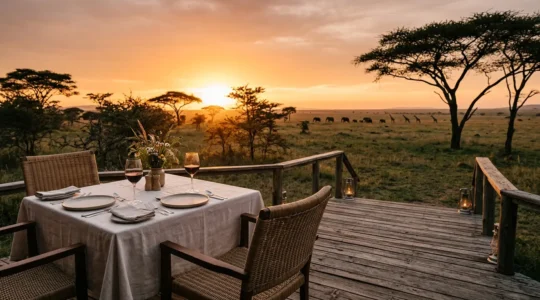
All-Inclusive vs. Full Board on Safari: A Financial Planner’s Guide to Hidden Costs
Choosing between All-Inclusive and Full Board for a safari is a financial calculation of risk and value, not a simple lifestyle choice. Full Board packages often create « value-leakage » through expensive à la carte extras that can quickly inflate your final…
Lire la suite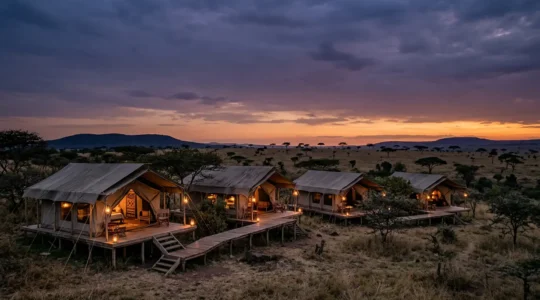
Canvas vs. Concrete: Why Are Tented Camps More Expensive Than Hotels?
The high price of a luxury tented camp isn’t a premium for ‘roughing it’; it’s an investment in sophisticated, removable architecture engineered to outperform traditional buildings. This architectural approach delivers superior comfort in extreme climates through passive engineering rather than…
Lire la suite