Adventure and activities
Adventure travel transforms ordinary vacations into unforgettable journeys filled with physical challenge, cultural immersion, and personal growth. Whether you’re rappelling down canyon walls, kayaking through bioluminescent bays, or tracking wildlife through remote wilderness, adventure activities offer experiences that push boundaries while connecting you deeply with nature and local cultures. The adventure travel sector has experienced remarkable growth recently, with more travelers seeking authentic experiences beyond traditional sightseeing.
Yet many would-be adventurers hesitate, uncertain about which activities match their abilities or how to prepare properly. This uncertainty is understandable—adventure activities span an enormous spectrum, from gentle nature walks suitable for families to technical mountaineering expeditions requiring years of training. This article provides a comprehensive foundation for understanding adventure activities, helping you identify appropriate challenges, plan effectively, and embark on adventures with confidence and safety.
Understanding Different Types of Adventure Activities
Adventure activities fall into distinct categories, each offering unique experiences and requiring different skill sets. Recognizing these categories helps you identify activities that align with your interests, physical capabilities, and travel goals.
Land-Based Adventures
Terrestrial activities form the most accessible entry point for adventure travelers. Hiking and trekking range from day walks on marked trails to multi-day expeditions through remote backcountry. Mountain biking combines cardiovascular challenge with technical skill, while rock climbing and canyoneering test both physical strength and mental focus. Think of land adventures as a ladder—each rung represents increasing technical difficulty and commitment, allowing you to climb gradually as your confidence builds.
Winter transforms landscapes into playgrounds for snow-based pursuits. Skiing and snowboarding dominate resort environments, while snowshoeing and cross-country skiing offer quieter wilderness experiences. Ice climbing and backcountry skiing represent the advanced end of winter activities, demanding specialized training and avalanche awareness.
Water-Based Adventures
Aquatic environments provide adventure opportunities across all skill levels. Kayaking and canoeing adapt to calm lakes, meandering rivers, or challenging whitewater rapids. Stand-up paddleboarding has emerged as an accessible option requiring minimal instruction, while rafting allows groups to experience river excitement together with professional guides managing technical decisions.
Beneath the surface, snorkeling and scuba diving reveal underwater ecosystems teeming with marine life. Surfing, kiteboarding, and windsurfing harness wave and wind energy, though these sports demand considerable practice to achieve proficiency. Coastal environments also enable coasteering—traversing shorelines by swimming, climbing, and jumping—which combines multiple skills into one exhilarating activity.
Aerial and Wildlife Adventures
For those seeking vertical perspectives, paragliding, zip-lining, and hot air ballooning offer breathtaking views with varying levels of participant control. These activities typically require professional operators, making them accessible even to beginners willing to trust experienced guides.
Wildlife-focused adventures prioritize observation over physical challenge. Safari experiences, whale watching, bird photography expeditions, and primate tracking combine gentle physical activity with patience and ecological knowledge. These pursuits reward attention to detail and respect for natural habitats rather than athletic prowess.
Matching Activities to Your Skill Level
Selecting adventures appropriate to your current abilities prevents frustration, injury, and potentially dangerous situations. Most activities use classification systems to communicate difficulty, though terminology varies by sport and region.
Hiking trails commonly employ simple, moderate, and strenuous classifications based on distance, elevation gain, and terrain technicality. A simple trail might cover five miles with minimal elevation change on well-maintained paths, while a strenuous hike could involve twelve miles, significant altitude gain, and scrambling over loose rock. Water activities use class systems—whitewater rapids progress from Class I (moving water with small waves) through Class VI (extreme danger, rarely attempted).
Honestly assess three key factors before committing to an activity:
- Physical fitness: Can you sustain the required exertion level for the activity’s duration? A six-hour trek demands different cardiovascular capacity than a two-hour climb.
- Technical skills: Do you possess necessary competencies, or will guides provide them? Belaying knowledge matters for rock climbing; paddle strokes determine kayaking success.
- Mental comfort: Heights, water, wildlife proximity, or remote isolation affect people differently. Acknowledge your psychological boundaries while gently stretching them.
Begin conservatively, especially when traveling to unfamiliar environments. High altitude, extreme heat, cold water, and jet lag all diminish performance compared to home conditions. Successfully completing a moderate activity builds confidence and provides realistic baseline data for planning progressively challenging adventures.
Essential Planning and Preparation
Proper preparation separates memorable adventures from miserable ordeals. Effective planning addresses logistics, physical conditioning, gear acquisition, and skill development well before departure.
Start by researching seasonal conditions at your destination. Monsoon rains render some trekking routes impassable, while summer heat makes desert activities dangerous. Conversely, certain experiences—witnessing wildlife migrations or optimal snow conditions—occur only during specific windows. Weather patterns dramatically affect both safety and enjoyment.
Physical conditioning should begin weeks or months ahead, depending on your chosen activity’s demands. Training specificity matters: cycling builds excellent cardiovascular fitness but doesn’t fully prepare legs for downhill hiking’s eccentric muscle contractions. If planning a multi-day trek, progressively increase your training hikes’ distance and pack weight. For water sports, swimming ability and comfort in aquatic environments prove essential.
Gear requirements vary enormously, but several principles apply universally:
- Prioritize safety equipment: Helmets, flotation devices, and navigation tools aren’t optional. Quality matters for items protecting your life.
- Test everything beforehand: Breaking in hiking boots, adjusting backpack fit, and familiarizing yourself with equipment operation prevents discoveries at inopportune moments.
- Consider renting initially: Specialty gear for occasional use—kayaks, climbing equipment, camping gear—often costs less to rent than purchase, especially for first-time adventures.
- Adapt to climate: Layering systems, moisture management, and sun protection requirements shift dramatically between environments.
Many activities benefit from instruction before your trip. Rock climbing gyms teach belay techniques and movement fundamentals. Kayaking courses in calm home waters prepare you for more challenging destination paddling. Even seemingly simple activities like snorkeling become more rewarding when you understand proper breathing techniques and mask clearing.
Safety Considerations and Risk Management
Adventure inherently involves uncertainty and calculated risk, but informed decision-making and proper precautions dramatically reduce danger. Understanding risk management transforms adventure from reckless gamble to educated challenge.
Professional guides and operators provide the safest introduction to unfamiliar activities. Reputable companies maintain equipment, employ experienced staff, carry insurance, and know local conditions intimately. When evaluating operators, investigate their safety record, guide certification, group size limits, and emergency protocols. Cheaper options sometimes cut corners on critical safety measures.
For independent adventures, comprehensive preparation becomes your responsibility. Always inform someone of your itinerary, expected return time, and emergency contacts. Carry communication devices appropriate to your location—cell phones work in many areas, but satellite messengers or personal locator beacons prove essential in true wilderness. Weather can change rapidly in mountains and on water; monitoring forecasts and recognizing warning signs prevents getting caught in dangerous conditions.
Understanding your limits represents perhaps the most critical safety skill. Summit fever—continuing despite warning signs because you’ve invested effort—causes many mountaineering accidents. The ocean will always be there for another surf session; pushing beyond fatigue in cold water risks hypothermia. Turning back requires more courage than continuing when conditions deteriorate or you’re exceeding your capabilities.
Medical preparation deserves attention proportional to remoteness and activity risk. Wilderness first aid training teaches improvised treatment when professional help lies hours away. Pre-existing medical conditions require special consideration—asthma medications at altitude, diabetes management during extended exertion, or cardiac limitations in extreme environments. Consult healthcare providers familiar with adventure medicine when planning challenging trips.
Physical and Mental Benefits of Adventure Activities
Beyond immediate thrills, adventure activities deliver lasting physical health improvements and psychological rewards. Understanding these benefits helps maintain motivation during challenging moments and informs activity selection based on personal goals.
Physically, adventure activities provide functional fitness—strength, endurance, balance, and coordination developed through purposeful movement rather than isolated gym exercises. Hiking strengthens legs and cardiovascular systems while burning significant calories. Paddling builds upper body and core strength. Rock climbing develops full-body power, flexibility, and problem-solving under physical stress. Unlike repetitive exercise routines, varied terrain and conditions constantly challenge your body in new ways, promoting comprehensive fitness.
Mental health benefits often prove even more profound. Natural environments reduce stress hormones, lower blood pressure, and improve mood—effects amplified when combined with physical activity. Successfully navigating challenges builds self-efficacy, the confidence that you can overcome obstacles through effort and skill. This confidence transfers to other life domains, making adventure activities transformative beyond the immediate experience.
Adventure travel also combats the digital overstimulation of modern life. Hours without screens, surrounded by natural beauty and focused on immediate physical tasks, provide mental reset impossible in daily routines. Many adventurers report that their clearest thinking and most creative insights emerge during or immediately after outdoor activities.
Social connections deepen through shared adventure experiences. Navigating challenges together—whether with friends, family, or strangers in a guided group—creates bonds that superficial interactions cannot match. Expedition behavior, the patience and mutual support required for group success in demanding environments, builds communication skills and empathy.
Starting your adventure journey requires honest self-assessment, thorough preparation, and willingness to step outside comfort zones while respecting your limits. Whether you begin with a gentle nature walk or commit to a challenging expedition, each experience builds the skills, confidence, and knowledge for increasingly rewarding adventures. The most important step is simply beginning—choosing an activity that sparks your curiosity and taking action to make it happen.
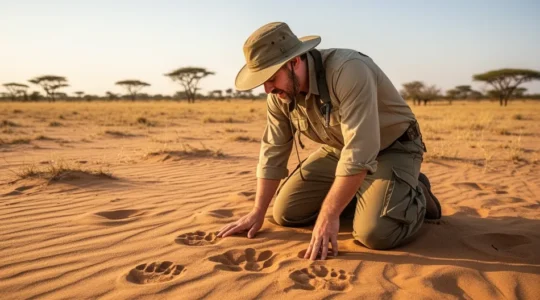
Can You Learn to Track? Joining a Tracking Course in Botswana
Learning to track is not about memorizing footprints; it’s an intellectual pursuit that transforms a passive safari into an active, deeply engaging story. Tracking is a learnable science, formalized by systems like CyberTracker, but rooted in ancient, multi-sensory deduction. Distinguishing…
Lire la suite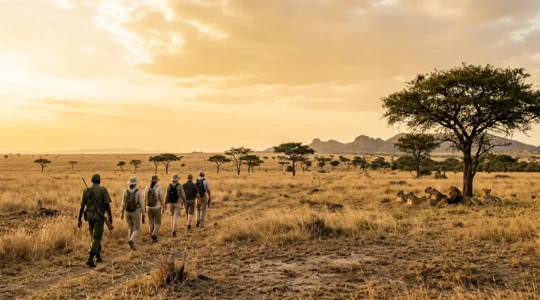
Adrenaline on Foot: What It Feels Like to Walk in Lion Country?
Most think a walking safari is just a slow game drive. They’re wrong. It’s not about spotting animals; it’s a psychological reset. It’s about shedding your modern self and re-engaging the primal senses that tell you whether you are the…
Lire la suite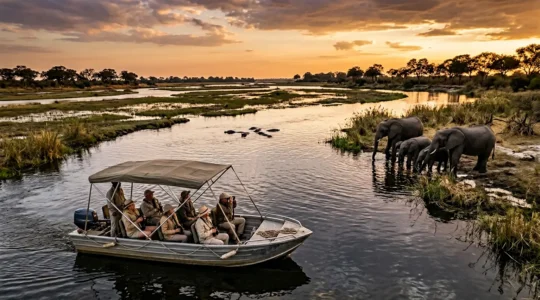
Motorboat Safari: Your Strategic Advantage Over a Mokoro or Game Drive
Deciding between a motorboat, mokoro, and game drive can be confusing, but the motorboat offers unparalleled strategic control over your safari experience. Its speed allows you to cover vast distances and react to dynamic wildlife sightings in real-time. It provides…
Lire la suite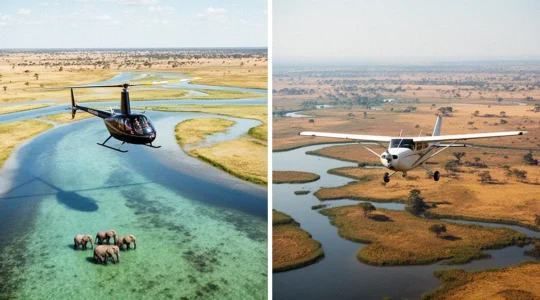
Helicopter vs. Fixed-Wing for Okavango Photography: A Pilot’s Guide to the Perfect Aerial Shot
The choice between a helicopter or a fixed-wing plane is not about which is ‘better,’ but which is the right tool for your specific photographic mission. Helicopters offer unparalleled control for detailed, low-altitude shots of individual animals and textures, making…
Lire la suite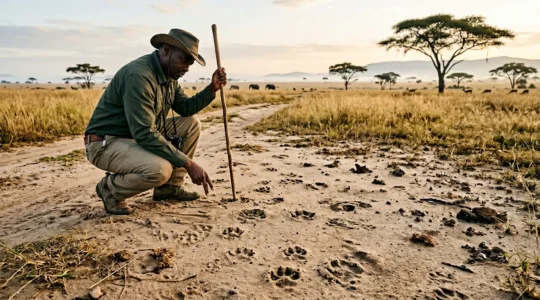
Beyond the Big Five: Why a Walking Safari Is the Ultimate Lesson in Reading the Bush
Most safaris feel like watching a film from a car seat, focused only on the big stars. The problem is you miss the entire plot. A walking safari transforms you from a passive viewer into an active reader of the…
Lire la suite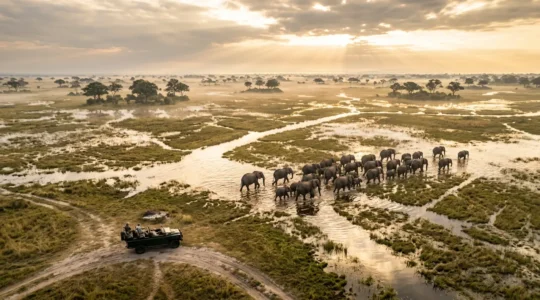
Electric Safari Vehicles: Does Silence Really Get You Closer to Animals?
The transition to electric safari vehicles is more than an environmental upgrade; it represents a fundamental reprogramming of the wildlife viewing experience, creating a superior platform for observation and photography. EVs are powered by self-sufficient solar grids, creating a true…
Lire la suite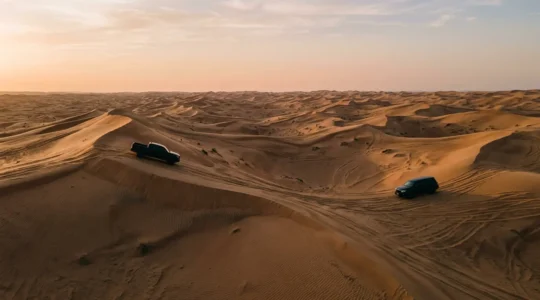
How to Choose Between a Hilux and a Land Cruiser for Deep Sand Driving?
For a solo driver in deep sand, the right choice is not about raw capability but about managing solo-recovery risk. The Land Cruiser’s superior power is offset by its significant weight, making a bogged situation a critical liability for a…
Lire la suite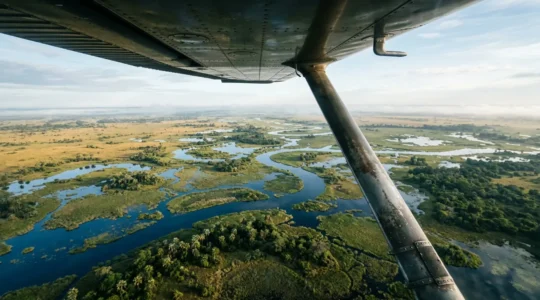
Is Flying Over the Delta a Scarier or Safer Experience Than Driving?
From the cockpit, a flight over the Delta isn’t a gamble on safety; it’s a demonstration of meticulous risk management that is far more controlled than any road on the ground. Procedures that seem unusual to passengers, like asking for…
Lire la suite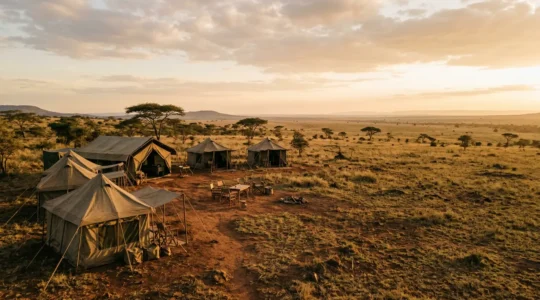
Why Choose a Mobile Safari Over a Permanent Lodge for Authenticity?
The greatest myth of modern safaris is that comfort requires walls; in reality, true authenticity is found by shedding them. Mobile camps don’t just move; they follow the intricate « Wilderness Rhythm, » putting you in the heart of the action where…
Lire la suite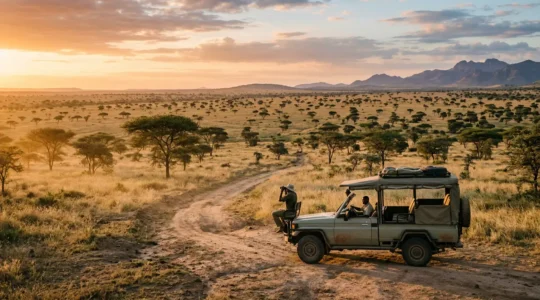
Why Do Top Lodges Have a Separate Tracker and Guide Team?
The tracker-guide team isn’t about one person finding and one person talking; it’s a seamless partnership of interpretation and translation from the language of the bush. The tracker is the master interpreter, reading the ‘silent language’ written on the ground,…
Lire la suite