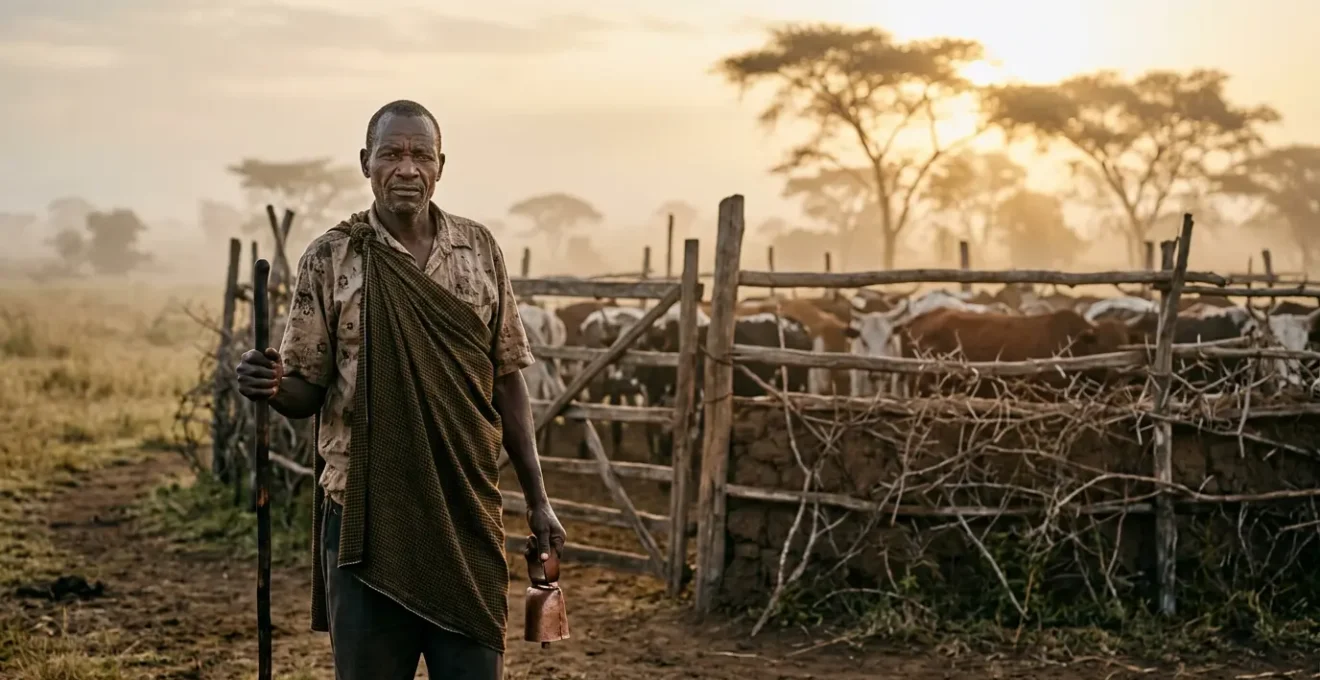
Protecting livestock in Botswana is less about fences and more about deploying a complex economic and behavioral toolkit to manage human-wildlife conflict.
- Non-lethal deterrents like specialized guardian dogs and chili pepper barriers have proven highly effective but require significant investment and local knowledge.
- Government compensation for predation losses often fails to cover the true economic impact on farmers, fueling resentment and retaliatory actions.
- National conservation policies, such as open international borders and fluctuating hunting bans, create profoundly different consequences for wildlife and for the local communities living alongside them.
Recommendation: Understanding this « economic friction » is the key to appreciating the true, on-the-ground challenge of human-wildlife coexistence in one of Africa’s last great wildernesses.
The image of Botswana is one of sprawling deltas and vast plains teeming with wildlife—a conservation success story. For the international traveler, it’s a pristine wilderness. But for the farmer whose kraal is raided at night, the reality is far more complex. The question is not simply how to save the animals, but how to survive alongside them. The common narrative often revolves around building higher fences or more aggressive patrolling, but these solutions barely scratch the surface of the problem.
The daily life of a Motswana farmer involves a constant, high-stakes negotiation with some of the planet’s largest and most powerful animals. This isn’t a simple conflict of good versus evil, but one of economic survival clashing with ecological balance. When a lion kills a cow, it’s not just a single animal lost; it’s a significant portion of a family’s annual income, their access to milk, and their future breeding stock. This immediate, personal cost is the epicenter of human-wildlife conflict.
The real solutions, therefore, are rarely simple. They form a « coexistence toolbox » of innovative, traditional, and often counter-intuitive strategies. This article moves beyond the safari postcard to unpack the ground-level reality of this conflict. We will explore the ingenious methods farmers use, the complex government policies they navigate, and the economic friction that defines their relationship with the wild. It’s a story of resilience, innovation, and the difficult tradeoffs required to live in one of the most wildlife-rich landscapes on Earth.
This guide delves into the practical and political realities of protecting both livelihoods and wildlife in Botswana. The following sections break down the specific strategies and challenges faced on the ground.
Summary: The Realities of Human-Wildlife Coexistence in Botswana
- Why Are Elephant Corridors Essential for Reducing Crop Raiding?
- How Does Burning Chili Pepper Stop Elephants from Entering Fields?
- Does the Government Pay Farmers Fair Market Value for Cattle Killed by Leopards?
- Did the Hunting Ban Reversal Help or Hurt Local Communities?
- How Do Anatolian Shepherd Dogs Protect Goats from Cheetahs?
- Why Does Chobe Have the Highest Elephant Concentration in Africa?
- Why Are There No Fences Between Botswana and Its Neighbors?
- Rhino Sanctuaries: Why Are Cameras and GPS Tags Often Banned Here?
Why Are Elephant Corridors Essential for Reducing Crop Raiding?
Elephants don’t recognize national borders or farm boundaries; they follow ancient migration routes ingrained in their collective memory. When farms are established directly in these paths, conflict is inevitable. Elephant corridors are not just lines on a map; they are critical arteries designed to guide these massive animals safely between protected areas, minimizing contact with agricultural lands. By providing elephants with dedicated, unobstructed pathways, corridors directly reduce the primary cause of crop-raiding: habitat fragmentation.
The scale of these movements is immense. Research within the Kavango-Zambezi Transfrontier Conservation Area (KAZA), a multi-country conservation zone, has revealed the vast distances elephants travel. A WWF study tracking 4 million GPS locations from over 300 elephants showed their movements spanning 106 million acres across five nations. These elephants are not wandering aimlessly; they are on a mission for food, water, and security. The establishment of the KAZA area itself was a response to research showing elephants were beginning to re-populate areas of southeastern Angola after the civil war, seeking out old territories.
These corridors serve as a pressure-release valve. By ensuring elephants can access different seasonal resources without being forced through human settlements, the likelihood of them viewing a farmer’s maize field as their only dinner option dramatically decreases. It’s a landscape-scale solution to a problem that cannot be solved one farm at a time. The strategy recognizes that the animal’s behavior is driven by need, and the most effective solution is to proactively manage their movement rather than reactively defending against it.
How Does Burning Chili Pepper Stop Elephants from Entering Fields?
When dealing with a six-ton animal, brute force is rarely the answer. Instead, farmers have turned to a more subtle weapon: the chili pepper. Elephants possess an incredibly sensitive sense of smell and a strong aversion to capsaicin, the chemical compound that gives chilies their heat. When chili is burned, it releases a pungent, irritating smoke that acts as a powerful, non-violent repellent. It doesn’t harm the elephant, but it creates a highly unpleasant sensory barrier that they are strongly motivated to avoid.
The application is ingenious in its simplicity. Farmers create « chili bombs » or briquettes by mixing dried, crushed chilies with elephant dung, which acts as a slow-burning fuel. These are placed strategically along the perimeter of a field. When an elephant approaches, the smoldering briquettes release a cloud of capsaicin-laced smoke that irritates their trunks and eyes. This method is part of a broader, escalating system of deterrents designed to warn elephants away before a more serious confrontation occurs.
Action Plan: The Four-Step Elephant Deterrent System
- Deploy Strobe Lights: The first warning is often visual. Shining a bright, flashing light at an elephant in the dark can be startling enough to make it turn around and leave the area.
- Burn Chili Briquettes: If light isn’t enough, igniting chili briquettes strategically placed around field perimeters creates a sensory barrier of pungent smoke the elephants are reluctant to cross.
- Apply Chili Pepper Spray: For persistent elephants, a targeted pepper spray can be used. This delivers a more concentrated dose of the irritant directly towards the animal.
- Plant Chili Buffer Crops: As a long-term solution, planting chili peppers as a permanent buffer crop around the main farm creates a living, self-sustaining deterrent that elephants will naturally avoid.
This « coexistence toolbox » approach demonstrates a deep understanding of animal behavior. It’s a graduated response system, starting with the least invasive method and escalating only as needed. It empowers farmers with effective, low-cost tools that protect their crops without harming the wildlife that defines their nation.
Does the Government Pay Farmers Fair Market Value for Cattle Killed by Leopards?
On paper, Botswana has a policy for compensating farmers for livestock lost to predators like lions and leopards. A statement from the government confirms that « Compensation for affected farmers…[is] carried out in accordance with the Wildlife Conservation and National Parks Act. » However, the critical gap lies between the official « market value » of a cow and the actual economic devastation its loss represents for a farmer. This discrepancy is a major source of the economic friction that fuels human-wildlife conflict. When compensation is perceived as inadequate, the incentive for retaliatory killing grows, a desperation that once led to 30 lions being killed by poison in 2013 alone by exasperated villagers.
The government’s payment may cover the immediate replacement cost of a single animal, but it fails to account for the cascading financial losses. This concept, known as benefit-cost asymmetry, is where the national benefit of having predators (tourism, ecological health) is enjoyed by all, but the cost is borne entirely by the individual farmer. A World Bank analysis highlights the hidden costs that official compensation completely ignores.
| Loss Type | Market Value Coverage | Actual Farmer Impact |
|---|---|---|
| Immediate cattle value | Covered | Full replacement cost |
| Lost future milk production | Not covered | Years of income loss |
| Lost offspring potential | Not covered | Breeding line disruption |
| Bureaucratic costs (time, travel, evidence) | Not covered | Multiple days lost wages |
As the table shows, the loss of a single cow ripples through a farmer’s economic future. The loss of future milk sales, the disruption of a carefully managed breeding line, and the wages lost traveling to government offices to file claims all add up. When a farmer feels the system is failing them, they are more likely to take matters into their own hands. True conflict mitigation, therefore, requires a compensation system that acknowledges the farmer’s total economic reality, not just a line item in a government ledger.
Did the Hunting Ban Reversal Help or Hurt Local Communities?
The 2014 trophy hunting ban in Botswana was lauded internationally as a major conservation victory. However, on the ground, the policy’s impact was deeply divisive and highlighted a profound disconnect between global conservation ideals and local economic realities. For many rural communities, controlled hunting was not about sport; it was a critical source of revenue, employment, and, paradoxically, a tool for managing wildlife populations that threatened their livelihoods. The income from hunting concessions funded schools, clinics, and provided jobs where few other opportunities existed.
When the ban was enacted, this revenue stream vanished overnight. The promised replacement—a surge in photographic tourism—did not always materialize in the remote areas where hunting had been the primary economic driver. Furthermore, communities lost their sense of ownership and control over the wildlife in their areas. Animals that were once a valuable asset became purely a liability. This sentiment was captured in a gut-wrenching social media post from a community member, reported by Foreign Policy, after the ban: « God, can you just bring someone who can be our voice to come and see how we suffer when there is no hunting? »
The subsequent reversal of the ban in 2019 was just as controversial, sparking outrage from international animal welfare groups. For the government and affected communities, however, it was a pragmatic decision. They argued that reintroducing limited, regulated hunting would bring back essential revenue, empower communities to benefit from wildlife again, and provide a legal mechanism to manage problem animals, thus reducing illegal retaliatory killings. The debate underscores a central tension in conservation: who benefits from wildlife, and who bears the cost of living with it? The answer is rarely simple and depends entirely on whom you ask.
How Do Anatolian Shepherd Dogs Protect Goats from Cheetahs?
While elephants present a challenge of scale, cheetahs and other predators pose a threat of speed and stealth. To counter this, conservationists and farmers have turned to a remarkable, ancient solution: livestock guarding dogs. Specifically, the Anatolian Shepherd, a large and imposing breed from Turkey, has proven to be an incredibly effective, non-lethal deterrent. These dogs are not bred to attack predators, but to protect their herd through intimidation and vigilance.
The success of this program lies in a deep, instinctual bond. Puppies are raised with the goat or sheep herd from a very young age, a process that makes them socially bond with the livestock. They come to view the herd as their family, or « pack. » Their protective instinct is then directed towards this adopted pack. According to the Cheetah Conservation Fund (CCF), who runs a major guarding dog program, the dogs’ primary defense mechanism is their presence and their powerful bark. When they sense a predator like a cheetah, they stand their ground and erupt in loud, aggressive barking, which is usually enough to scare the notoriously timid cat away without any physical confrontation.
The results are transformative. Farmers who once lost dozens of goats a year to predation have seen their losses plummet. Africa’s longest-running research on the topic confirms the method’s efficacy, with farmers in the CCF program reporting a staggering 91% reduction in livestock losses. This approach shifts the dynamic from a reactive, and often lethal, response to predation to a proactive, preventative security system. The dog becomes a 24/7 security guard, allowing farmers and predators to share the same landscape with far less conflict.
Why Does Chobe Have the Highest Elephant Concentration in Africa?
Chobe National Park is famous for hosting the largest elephant population on the continent, with estimates of around 120,000 Kalahari elephants roaming the area. This incredible density is, on one hand, a monumental conservation success. On the other, it is the source of immense ecological pressure and a key driver of human-elephant conflict in the surrounding regions. The reason for this concentration is not simply that the habitat is perfect, but is deeply rooted in geopolitics and elephant behavior: Chobe is a sanctuary.
Many of the elephants in northern Botswana are, in effect, political refugees. They have fled heavy poaching and civil unrest in neighboring countries like Zambia, Zimbabwe, and Angola over several decades. Elephants are intelligent enough to recognize where they are safe. They have learned that crossing the border into Botswana means a dramatic decrease in the threat from poachers. This has resulted in a massive, decades-long migration into the relative safety of the Okavango Delta and Chobe National Park.
This « refugee » status creates a paradox. Botswana is celebrated for its successful anti-poaching policies and for providing a haven for these animals. However, this success has led to an elephant population that many argue is beyond the natural carrying capacity of the land. The elephants cause significant damage to vegetation, and their sheer numbers force them to expand their range into agricultural areas, creating a flashpoint for conflict with farmers. Chobe’s elephant herds are therefore both a symbol of conservation triumph and a source of intense local challenge, embodying the complex consequences of successful protection in a volatile region.
Why Are There No Fences Between Botswana and Its Neighbors?
The idea of a national park without fences can seem counter-intuitive, but in the context of Southern Africa’s vast ecosystems, it is essential. Botswana’s borders with its neighbors are often deliberately unfenced to facilitate the Kavango-Zambezi Transfrontier Conservation Area (KAZA). This massive initiative aims to connect protected areas across five countries, creating one of the world’s largest conservation landscapes. The absence of international fences is a core tenet of this strategy. As a WWF study highlights, these « wildlife corridors facilitate the movement of species, crucial for maintaining genetic diversity, enabling seasonal migrations, and allowing animals to adapt to climate change. »
However, this creates a confusing paradox for observers: if Botswana champions fence-free international borders, why are fences such a contentious issue within the country? The answer lies in the *type* of fence. The most problematic barriers are not on the international borders, but are the veterinary cordon fences built internally. These fences were erected to separate cattle from wildlife to control the spread of diseases like foot-and-mouth, primarily to protect Botswana’s lucrative beef exports to the European Union. While they serve a valid economic purpose, their placement has had devastating consequences for wildlife, cutting across ancient migration routes for zebra, wildebeest, and other species, leading to mass die-offs and fragmenting habitats.
This distinction is critical to understanding the ground-level reality of conservation in Botswana, as shown by the table below based on analysis from conservation news outlet Mongabay.
| Fence Type | Purpose | Impact on Wildlife |
|---|---|---|
| International borders | Often unfenced for KAZA conservation | Allows transboundary migration |
| Veterinary cordon fences | Separate wildlife from cattle for disease control | Block traditional migration routes |
| Proposed smart corridors | GPS-tracked wildlife paths | Enable targeted conservation |
This reveals the central conflict: a policy of openness for conservation on one hand, and a policy of separation for commerce on the other. Resolving the negative impacts of these internal veterinary fences, perhaps by realigning them or creating « smart corridors » for wildlife, is one of the single greatest challenges for balancing economic needs and ecological integrity in Botswana.
Key Takeaways
- Conflict is Economic: Human-wildlife conflict is driven more by financial loss and economic pressure on local communities than by a simple lack of conservation ethic.
- The Toolbox Approach: Effective solutions are not singular but are a combination of behavioral deterrents (chili, dogs), landscape management (corridors), and policy (compensation, hunting regulations).
- Policy has Paradoxes: National policies can have conflicting outcomes, such as promoting fence-free international borders for wildlife while simultaneously erecting internal fences for disease control that harm those same animals.
Rhino Sanctuaries: Why Are Cameras and GPS Tags Often Banned Here?
In the high-stakes battle to protect rhinos from poaching, information is a weapon, and it can be used by both sides. For this reason, many rhino sanctuaries and anti-poaching units operate under a strict policy of « operational security, » often banning visitors from using cameras with GPS capabilities or posting any location-specific information online. A seemingly innocent geotagged photo on social media can provide sophisticated international poaching syndicates with the exact coordinates they need to target a rhino, turning a tourist’s holiday picture into an animal’s death warrant.
The threat is not hypothetical. Poaching syndicates are technologically advanced criminal organizations that actively scan the internet for intelligence. They can analyze metadata from photos and videos to pinpoint an animal’s location with frightening accuracy. To counter this, rhino protection has adopted a military-style approach to information control. The real-time locations of rhinos are treated as classified intelligence, known only to a small, highly-vetted circle of anti-poaching personnel.
This has led to a counter-intuitive trend: in some of the most sensitive areas, conservation is going low-tech to stay secure. Instead of relying on internet-connected GPS trackers that could be hacked, some sanctuaries are reverting to closed-loop tracking systems that don’t transmit data over public networks, or even traditional foot patrols and manual tracking. The ban on GPS and cameras for visitors is the public-facing part of this much deeper security strategy. It’s a stark reminder that in the world of rhino conservation, the digital world can be just as dangerous as a poacher’s rifle.
To truly understand the future of conservation, the next step is to look beyond the animals and focus on the economic, social, and technological systems that will ultimately determine their survival.
Frequently Asked Questions on Rhino Sanctuaries: Why Are Cameras and GPS Tags Often Banned Here?
Why are geotagged photos dangerous for rhinos?
Sophisticated poaching syndicates can analyze even slightly delayed social media posts to pinpoint exact rhino locations. The embedded GPS data in a digital photo can act as a homing beacon for criminals, leading them directly to a high-value target.
What is ‘operational security’ in wildlife protection?
Operational security (OPSEC) is a military-style information blackout ensuring only trusted anti-poaching units know the real-time locations of rhinos. It involves controlling all data, from GPS tracks to patrol schedules, to prevent intelligence from falling into the hands of poaching syndicates.
Are sanctuaries reverting to low-tech methods?
Yes, in response to the growing threat of cybercrime, some high-security sanctuaries are deliberately using low-tech methods. This can include relying more on foot patrols and using closed-loop, non-internet-connected tracking systems to create an « air gap » that prevents digital data breaches.