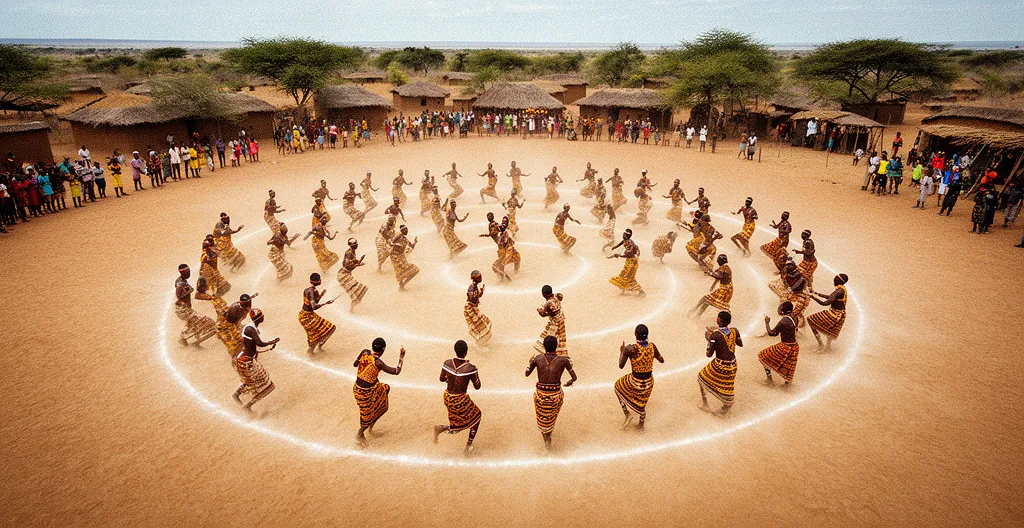
Planning a trip to Botswana around culture, not just wildlife, requires a new approach: choosing your festival first.
- For deep-rooted history and ancestral reverence, target the Dithubaruba festival to experience authentic Kwena heritage.
- For a vibrant, multi-disciplinary contemporary arts scene, the Maitisong Festival in Gaborone is your non-negotiable anchor.
Recommendation: Decide whether your cultural pilgrimage leans towards ancestral tradition or contemporary performance, and let that single choice build your entire itinerary.
For the culture-first traveler, a journey to Botswana presents a unique planning challenge. While safari itineraries are built around animal migrations and seasonal parks, your trip deserves an anchor rooted in human celebration and heritage. The question isn’t « when is the best time to see elephants? » but « which cultural event will define my experience? » This guide moves beyond the generic advice to « see local culture » and instead frames your trip as a cultural pilgrimage, where your first and most crucial decision is choosing the festival that will serve as your itinerary’s heart.
This decision often boils down to a choice between two of the nation’s most significant events: the Dithubaruba Cultural Festival and the Maitisong Festival. One is a profound link to ancestral history, a celebration of a specific people’s living heritage. The other is a vibrant, forward-looking explosion of pan-African and international creativity. They represent two powerful currents in Botswana’s soul. Choosing between them isn’t just a matter of dates; it’s a declaration of what you seek. This guide is your logistical blueprint to make that choice, ensuring your journey is not just a visit, but a deep and meaningful connection.
To help you craft your perfect cultural journey, this article breaks down the distinct character, logistics, and spirit of Botswana’s key celebrations. From the historic heart of the Kwena people to the modern pulse of Gaborone’s arts scene, you’ll gain the insight needed to select the event that will anchor your entire trip.
Summary: Maitisong to Dithubaruba: Crafting Your Cultural Itinerary
- Why Is the Dithubaruba Festival Crucial for Kwena Heritage?
- Poetry and Theatre in the Delta: What to Expect at MIAF?
- Why Is the Toyota 1000 Desert Race the « Dakar » of Botswana?
- Camels and Quads: What Happens at the Khawa Cultural Festival?
- How to Celebrate Boipuso (September 30th) Like a Local?
- Why the San Healing Dance Is Still Performed at Night in the Kalahari?
- How Is the Segaba Instrument Played Using Only One String?
- What Is the Role of the Kgotla Court in Modern Botswana Village Life?
Why Is the Dithubaruba Festival Crucial for Kwena Heritage?
If your cultural pilgrimage is driven by a desire to connect with the deep, foundational history of a people, then the Dithubaruba Cultural Festival is your destination. This isn’t a performance for tourists; it is a vital act of remembrance and cultural preservation for the Bakwena people of Molepolole. The entire event is a tribute to their living history, centered on the legacy of their revered 19th-century leader, Kgosi Sechele I, a figure of immense historical importance who shaped the destiny of his nation.
Held annually at the Ntsweng heritage site, the festival’s heart is the Dikgafela ceremony. Imagine the scene: elderly women, dressed in traditional attire, carry the harvest and handcrafted traditional beer in pots balanced perfectly on their heads. They proceed with grace and purpose to the kgotla (the traditional village court), presenting the fruits of the land as an act of thanksgiving. This single moment encapsulates the festival’s spirit: a profound respect for tradition, community, and the ancestral lands that sustain them.
Choosing Dithubaruba as your itinerary anchor means immersing yourself in a specific, tangible heritage. You are witnessing the reinforcement of cultural identity, where stories, music, and rituals are passed down not as relics, but as a vibrant, breathing part of modern Bakwena life. It is an experience grounded in a single place and a single people, offering an unparalleled depth of connection for the traveler who seeks authenticity above all else.
This festival is less about spectacle and more about soul, providing a powerful window into the historical bedrock of Botswana.
Poetry and Theatre in the Delta: What to Expect at MIAF?
In stark contrast to the singular focus of Dithubaruba, the Maitisong Festival (often abbreviated as MIAF) is a sprawling, dynamic celebration of contemporary performing arts. If your vision of a cultural pilgrimage involves a vibrant mix of theatre, music, dance, and spoken word from across the continent and beyond, then this is your itinerary anchor. Held in the capital city of Gaborone, Maitisong is Botswana’s premier arts event, a testament to the nation’s modern, cosmopolitan identity.
The festival’s scale is impressive, offering a packed schedule of performances. It is a multi-venue affair, transforming the city itself into a stage. One evening you might be in a formal theatre watching a cutting-edge play, the next you could be under the stars at an outdoor concert, or even exploring visual arts exhibitions in a gallery. This diversity is its greatest strength, showcasing both established international acts and emerging local talent on the same platform.
Unlike the deep-rooted ancestral focus of other events, Maitisong is about the now. It’s a showcase of what artists are creating today, reflecting current social themes, artistic trends, and a fusion of cultural influences. A report on the event highlights that the Maitisong Festival lasts nine days, providing an extensive window for travelers to dive into this creative explosion. Choosing Maitisong means planning a trip around a bustling urban center and embracing a schedule filled with variety, energy, and artistic discovery.
This festival is the perfect choice for the traveler who thrives on artistic energy and wants to experience the pulse of modern Botswana.
Why Is the Toyota 1000 Desert Race the « Dakar » of Botswana?
Culture isn’t always confined to ancient rituals or formal theatres. Sometimes, it’s written in the dust kicked up by high-performance engines and the collective roar of a massive crowd. The Toyota 1000 Desert Race, affectionately known as « Mantshwabisi, » is a cultural phenomenon of a different kind. Often called the « Dakar of Botswana, » this off-road motorsport event is the largest and most famous in Southern Africa, embodying a modern, adrenaline-fueled aspect of the nation’s identity.
This isn’t just a race; it’s a national pilgrimage for motorsport enthusiasts. For three days, the desert landscape is transformed into a sprawling festival ground. The main event is the grueling 1000-kilometer race for cars, bikes, and quads, but the experience extends far beyond the track. Families and groups of friends set up elaborate campsites, the air fills with the smell of braais (barbecues), and a palpable sense of community and celebration takes over.
The sheer scale of the event solidifies its cultural importance. Far from a niche sporting event, it is a massive gathering that defines the winter season for many Batswana. In fact, a local news report noted that the race attracts over 50,000 attending the event over the three days of competition. Choosing to time your trip around this race means experiencing a side of Botswana that is loud, exciting, and deeply passionate. It’s a chance to see how modern obsessions and traditions of communal gathering can merge into a uniquely thrilling cultural experience.
For the traveler interested in contemporary passions and large-scale public celebrations, this event offers an unforgettable and high-octane itinerary anchor.
Camels and Quads: What Happens at the Khawa Cultural Festival?
What happens when ancient desert traditions collide with modern horsepower? You get the Khawa Dune Challenge & Cultural Festival, one of Botswana’s most unique events. Held in the breathtaking landscapes of the Kgalagadi District, this festival is the perfect itinerary anchor for the traveler who doesn’t want to choose between heritage and adrenaline. It masterfully blends the old and the new, creating a celebration that is both a cultural exhibition and an adventure sport spectacle.
The festival’s identity is built on this juxtaposition. One moment, you can be witnessing the timeless skill of camel riding across the dunes, a practice deeply tied to the history of the Kgalagadi. The next, the roar of engines fills the air as quad bikes and 4x4s tackle the very same sands in high-stakes challenges. This blend extends to all aspects of the event, from traditional dance performances and craft markets to live music concerts and modern desert camping.
This dual nature is what makes the Khawa festival so compelling, offering a little something for everyone. A recent travel guide highlighted this unique blend by creating a comparative analysis. The table below, inspired by their findings, perfectly illustrates the two worlds that coexist at Khawa.
| Traditional Elements | Modern Activities |
|---|---|
| Camel riding demonstrations | Quad bike racing on dunes |
| Setapa traditional dance | Off-road vehicle challenges |
| Seswaa preparation over open fire | Desert camping with modern gear |
| Traditional craft exhibitions | Live music concerts |
As this comparative look at Botswana’s cultural events shows, Khawa thrives on its ability to honor the past while embracing the excitement of the present.
Ultimately, choosing Khawa means opting for a journey that celebrates Botswana not as a static museum of culture, but as a place where tradition and modernity race side-by-side.
How to Celebrate Boipuso (September 30th) Like a Local?
Beyond organized festivals, there is one day when the entire nation of Botswana erupts in celebration: Boipuso, or Independence Day, on September 30th. This is not an event you merely attend; it’s a nationwide atmosphere you immerse yourself in. For the culture-first traveler, planning your trip to coincide with Boipuso offers a chance to see the country’s collective spirit in its most joyous and authentic form, far from any curated tourist experience.
The celebration is decentralized and organic, happening in every city, town, and village. While formal events take place at the National Stadium in Gaborone, the real magic is found in the streets and communities. As one travel guide aptly puts it, this day is about widespread, spontaneous joy. In their guide to events in Botswana, Exoticca Travel Guide notes:
This day, which is celebrated every 30th September, is characterized by many street parties, parades, and events related to the culture and traditions of the different ethnic groups which make up the country.
– Exoticca Travel Guide, Events in Botswana Guide
To truly celebrate like a local means participating, not just observing. It means wearing the national colors of blue, black, and white with pride. It’s about joining a neighborhood party, tasting traditional celebration foods like serobe (tripe) and bogobe jwa lerotse (melon porridge), and feeling the rhythm of Kwasa Kwasa and modern Motswako music that fills the air. It’s an immersive experience of national pride.
Your Action Plan: The Boipuso Celebration Guide
- Wear national colors: blue, black, and white throughout the day to show solidarity.
- Start the morning with the national anthem and struggle songs at local community gatherings.
- Prepare or seek out traditional dishes: serobe (tripe) and bogobe jwa lerotse (melon porridge) are essential.
- Join neighborhood parties rather than focusing only on the formal National Stadium events in Gaborone.
- Dance to Kwasa Kwasa and modern Motswako hits at the evening celebrations that spring up everywhere.
This isn’t an event to watch from the sidelines; it’s an invitation to be part of the national family for a day.
Why the San Healing Dance Is Still Performed at Night in the Kalahari?
Moving from the scale of national festivals to the intimacy of sacred ritual, witnessing a San healing dance is one of the most profound cultural experiences Botswana has to offer. This is not a performance in the traditional sense; it is a spiritual ceremony with a specific purpose, deeply embedded in the worldview of the San people. The fact that it is still performed today, often under the full moon in the Kalahari, speaks to its enduring power and importance.
The central question for many observers is why these dances are held at night. The answer lies in San spirituality. The night is considered a sacred time when the veil between the physical and spiritual worlds is at its thinnest. Darkness and the cool desert air are believed to be essential for the healers to enter a trance state and activate ‘n/om’, a powerful spiritual energy used for healing individuals and the community as a whole. The dance, characterized by rhythmic clapping, chanting, and intense physical exertion, is the mechanism for building this energy until the healer transcends.
For travelers, witnessing this is a rare privilege. Events like the Kuru Dance Festival, held in the D’Kar region around August, provide a community-managed opportunity to experience these rituals respectfully. It’s crucial to approach this not as a consumer, but as a humble witness. This means seeking out community-run initiatives, always asking for permission before taking photos, and understanding that your presence supports the preservation of these traditions for future generations. It is a visceral experience that adds a layer of deep spiritual understanding to any journey.
This experience transcends tourism, offering a rare and humbling glimpse into one of humanity’s most ancient spiritual practices.
How Is the Segaba Instrument Played Using Only One String?
Sometimes, the soul of a culture can be found not in a massive festival, but in the sound of a single string. The segaba is a traditional Botswana instrument that perfectly embodies this idea. At first glance, it appears deceptively simple: often a stick or a tin can, a single wire string, and a bow. Yet, in the hands of a master, this one-stringed fiddle produces melodies that are haunting, complex, and deeply evocative of the Kalahari landscape.
The magic of the segaba lies in the technique. The player uses their mouth as a resonator, changing the shape of their oral cavity to create different harmonics and tones. By moving their mouth while bowing the string, they can produce a surprising range of notes and a vocal, almost human-like quality in the music. The instrument is a testament to incredible ingenuity, transforming the simplest of materials into a sophisticated tool for musical expression. It is an art form that requires immense skill and sensitivity.
Historically, the segaba was the companion of cattle herders, used to pass the long, quiet hours in the bush and to tell stories through song. Today, its melancholic sound can still be heard, providing a powerful acoustic link to the past. At cultural festivals like Dithubaruba, segaba players often perform alongside contemporary artists, creating a beautiful dialogue between the old and the new. Hearing it live is to hear the sound of the land itself, a musical tradition kept alive by dedicated musicians who carry the stories of their ancestors in their melodies.
To seek out a segaba performance is to seek out one of the most authentic and intimate sounds of Botswana’s cultural heart.
Key Takeaways
- Festival choice is the most important decision for a culture-first traveler in Botswana, defining the entire trip’s tone and logistics.
- Dithubaruba offers a deep, singular immersion into Bakwena heritage, while Maitisong provides a broad, contemporary, and international arts experience.
- Botswana’s cultural landscape is diverse, encompassing everything from sacred San rituals and national holidays to modern motorsport passions.
What Is the Role of the Kgotla Court in Modern Botswana Village Life?
To truly understand the fabric of Botswana’s cultural life, one must look beyond the festivals and into the institution that underpins community itself: the kgotla. The kgotla is the traditional public meeting place, court, and administrative center of a village, and it remains a remarkably powerful and relevant institution in modern Botswana. It is not a historical relic but a living, breathing heart of civic and social life, where decisions great and small are made through public consensus.
Presided over by the local chief, or Kgosi, the kgotla is where everything from minor disputes to major resource management plans are debated openly. It is the forum where the organization of a festival like Dithubaruba is finalized, with elders and community members all having their say. The Dikgafela harvest ceremony, for example, culminates at the kgotla, demonstrating its central role in ritual and community governance. It is the ultimate expression of Botswana’s deeply-held democratic and communal values.
For a visitor, being invited to a kgotla meeting is a profound honor and requires adherence to strict etiquette. One must dress conservatively, wait to be seated, and always allow elders and the Kgosi to speak first. It is a place of deep respect. Understanding the kgotla is to understand the source from which much of the country’s social cohesion and cultural strength flows. It is the bedrock upon which festivals are built and traditions are upheld, ensuring that culture remains a community-owned and community-driven force.
Ultimately, your choice of festival is the first step in a cultural pilgrimage. By selecting Dithubaruba, Maitisong, or another event as your anchor, you are crafting a journey that promises not just sights and sounds, but a genuine connection to the vibrant, multifaceted soul of Botswana. Start planning your itinerary today by deciding which story you want to be a part of.