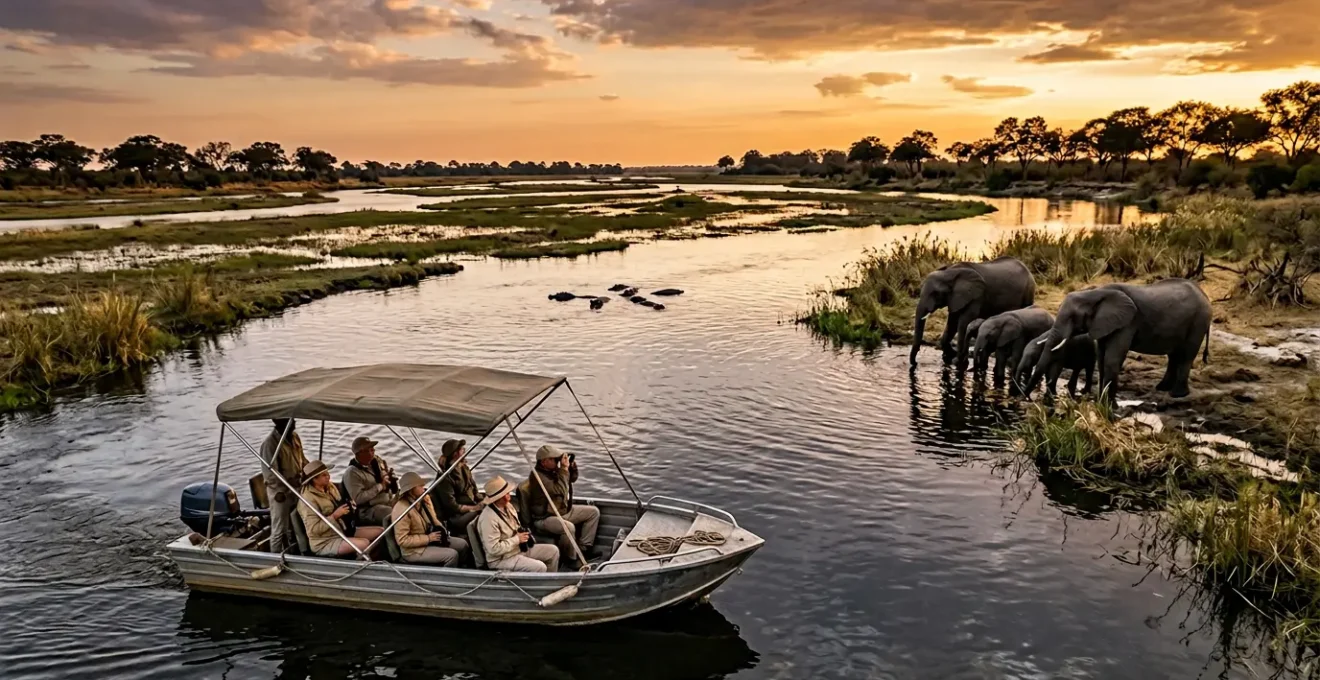
Deciding between a motorboat, mokoro, and game drive can be confusing, but the motorboat offers unparalleled strategic control over your safari experience.
- Its speed allows you to cover vast distances and react to dynamic wildlife sightings in real-time.
- It provides a unique, water-level perspective that is essential for professional-grade photography of birds and aquatic life.
Recommendation: Prioritize a motorboat safari for active photography, accessing remote water-locked areas, and maximizing your viewing opportunities during the high-water season.
As a water sports manager in the heart of Africa’s great wetlands, I see the same question in the eyes of every traveler: « With so many options, how do I choose? » You’ve heard about the silent, poetic glide of a mokoro and the classic overland quest for big cats in a game viewer. Both are iconic experiences. But overlooking the motorboat safari is a strategic mistake, especially for those who want to actively shape their wildlife encounters rather than passively observe them.
Most guides will tell you the obvious: mokoros are quiet, and game drives cover land. This is true, but it misses the fundamental point. The real difference isn’t just about the mode of transport; it’s about control. A motorboat isn’t merely a way to get from A to B on the water. It’s a dynamic platform that gives you command over distance, perspective, and, most importantly, time. It allows you to transform a passive tour into an active, strategic pursuit of the most incredible sightings.
This guide isn’t about dismissing other safari types. It’s about revealing the unique, tactical advantages of a motorboat. We’ll explore how its speed unlocks opportunities, why it’s the ultimate tool for certain types of photography, and how it provides exclusive access to landscapes and animals that are simply out of reach for any other vehicle. By the end, you’ll understand not just *what* a motorboat safari is, but *how* to use it as the key to unlocking the deepest secrets of the floodplain.
To help you navigate these choices, this article breaks down the specific scenarios where a motorboat truly shines. From high-speed pursuits to serene sunset cruises, you’ll gain a clear understanding of how to integrate this activity into your perfect safari itinerary.
Summary: Unlocking the Strategic Power of a Motorboat Safari
- When Is the Speed of a Motorboat an Advantage for Sightings?
- Why Is a Motorboat the Best Platform for Photographing Fish Eagles?
- Why Is the « Booze Cruise » Essential for the Okavango Experience?
- Are Large Riverboats in Chobe Too Crowded for Serious Viewing?
- How Safe Are Small Aluminum Boats Among Large Crocodiles?
- Motorboat or Game Viewer: Which Is Better for Spotting Sitatunga?
- Morning or Sunset: Which Chobe Boat Cruise Offers Best Photography?
- What Activities Are Possible on the Floodplains During High Water Season?
When Is the Speed of a Motorboat an Advantage for Sightings?
In a landscape as vast as the Okavango Delta, which covers an immense 16,000 square kilometres of winding channels and lagoons, distance is a critical factor. While a mokoro offers intimacy, it moves at the pace of a slow walk. A motorboat’s speed isn’t about racing; it’s about strategic repositioning. It transforms you from a passive observer, hoping for a chance encounter, into an active participant who can respond to the dynamic pulse of the wild.
Imagine your guide gets a radio call about a herd of elephants swimming across a channel five kilometers away. In a mokoro, you’d miss it entirely. In a motorboat, you can get there in minutes. This ability to cover ground—or rather, water—quickly is what allows you to « chase the action. » It’s the difference between hearing about a great sighting and actually witnessing it. This speed is a form of time arbitrage; you are effectively buying yourself more opportunities to see incredible things within the limited window of your safari.
The strategic advantages of this speed are manifold, allowing for a proactive approach to wildlife viewing:
- Rapid Response: Quickly move between different high-potential zones, such as from a hippo pool to a reported predator sighting on a riverbank.
- Following Dynamic Events: Keep pace with moving subjects, like a herd of swimming elephants or a congregation of crocodiles, observing their behavior for longer.
- Golden Hour Maximization: Reach distant, scenic locations like bird colonies or unique landscapes precisely when the light is perfect for photography, without wasting time on a slow transit.
- Vast Area Coverage: Effectively navigate the extensive perimeters of reed beds and papyrus stands where shy species like the sitatunga tend to hide.
Why Is a Motorboat the Best Platform for Photographing Fish Eagles?
For any serious wildlife photographer, perspective is everything. While a game viewer gives you a top-down view and a mokoro places you low on the water, only a motorboat combines that low angle with the stability and maneuverability needed for truly professional shots. This is especially true when photographing one of the Delta’s most iconic residents: the African Fish Eagle.
To capture a world-class image of a fish eagle, you need to be at eye level. This perspective creates an intimate, powerful portrait that makes the viewer feel present. From a tall game viewer, you’re always looking down. From a mokoro, you’re often too unstable and slow to position yourself perfectly for the shot, especially if the bird is active. A motorboat, however, offers the perfect solution. The guide can cut the engine and drift into the ideal position, allowing you to shoot from a stable, low platform. This perspective control is the secret to moving from a simple snapshot to a breathtaking photograph.
As you can see, this water-level angle isolates the subject from distracting background elements, creating a clean, artistic bokeh effect that makes the bird’s features pop. Motorboat safaris offer these unique perspectives, which are a massive advantage for birdwatchers and wildlife photographers wanting to capture images from a different angle against phenomenal backdrops. You can get close without disturbing the wildlife, using the water itself as a natural canvas.
Why Is the « Booze Cruise » Essential for the Okavango Experience?
Dismissing the sunset boat trip as a mere « booze cruise » is to miss its deeper cultural and sensory significance. This daily ritual is far more than just drinks on the water; it is a fundamental part of the safari rhythm, a moment to decompress, socialize, and connect with the landscape on an emotional level. It’s the moment the day’s adrenaline gives way to awe.
As the sun begins its descent, painting the sky in fiery hues, the character of the Delta changes. The heat of the day subsides, and a new cast of characters emerges. Hippos begin their nightly trek to grazing grounds, and the air fills with the calls of nocturnal birds. Being on the water during this transition is a truly magical experience. The boat’s engine is often cut, and you drift in silence, absorbing the sights and sounds. It’s a shared, collective experience that fosters a unique bond between guests, as highlighted by one traveler’s experience:
We had an amazing time on the Zambezi Queen. Wayne and his staff were outstanding. We were so well taken care of, had a blast and enjoyed the wildlife and storms to the fullest. The staff included us in their beautiful music and dance on our last night.
– Doc4 from Plainfield, NJ, Zambezi Queen
This social aspect is key. Sharing stories of the day’s sightings with a cool drink in hand, while surrounded by the unparalleled beauty of an African sunset, is a memory that lasts a lifetime. As safari operators often say, it’s an integrated part of the whole adventure. The team at Okavango River Safaris puts it perfectly:
No African experience is complete without a refreshing sun downer cruise followed by a fine dining experience in our dining tent and evenings are spent around the campfire gazing at stars reliving the day’s experiences in the Okavango Delta.
– Okavango River Safaris, Classic Tented Boat Safaris
Are Large Riverboats in Chobe Too Crowded for Serious Viewing?
It’s a valid concern for any serious wildlife enthusiast: will I be jostling for a view on a large boat packed with tourists? In places like the Chobe River, where larger vessels are common, the fear of a crowded, impersonal experience can be a deterrent. However, these boats are often cleverly designed to mitigate this very issue, turning size into an advantage.
Unlike a small, single-level boat, larger riverboats are typically built with multiple viewing tiers. This layered design ensures that everyone has an unobstructed sightline. Guests on the lower deck get a dramatic, water-level perspective, perfect for eye-to-eye encounters with elephants drinking at the river’s edge. Those on the middle and upper decks gain a panoramic, elevated view, allowing them to spot wildlife further away and appreciate the grand scale of the landscape. This variety of vantage points means you can change your perspective throughout the cruise.
Furthermore, size equates to stability and amenities. A larger boat is a much more stable platform for photography, especially with long lenses. There’s less rocking, which is crucial for sharp images in the low light of dawn or dusk. You also have the freedom to move around, switching sides as the action dictates, without upsetting the boat’s balance. Onboard facilities and refreshments add a level of comfort that allows you to focus completely on the wildlife, making the experience more enjoyable and sustainable for a longer duration.
How Safe Are Small Aluminum Boats Among Large Crocodiles?
Gliding through channels in a small aluminum boat, knowing that some of Africa’s largest crocodiles are lurking just beneath the surface, can be an intimidating thought. As a manager, safety is my absolute priority, and I can assure you that these excursions are managed with an exceptional level of professionalism and precaution. The key to safety lies in guide expertise, animal behavior, and robust emergency protocols.
Firstly, your guide is your greatest asset. Botswana’s guides undergo rigorous training to interpret animal behavior. They understand a crocodile’s « threat bubble » and are experts at maintaining a respectful, safe distance. They can read subtle cues, like a gape or a change in posture, that indicate a crocodile is feeling defensive. Secondly, to a large crocodile, a noisy, metal boat is not perceived as prey. It is seen as a large, inedible, and unfamiliar object. Incidents are almost exclusively defensive, not predatory, which is why respecting their space is paramount. Strict rules, such as never trailing hands or feet in the water, are non-negotiable.
Beyond guide training, there is a formidable safety net in place. The industry in Botswana operates with a high degree of organization. Guides maintain radio communication between boats, sharing information on sightings and any potential hazards. In the unlikely event of an emergency, the backup is comprehensive. For reputable operators, this includes having guides equipped with satellite phones and ensuring guests are linked with a helicopter rescue service. This commitment to preparedness is a core tenet of the safari industry, with some areas boasting 100% satellite phone and helicopter rescue coverage for total peace of mind.
Motorboat or Game Viewer: Which Is Better for Spotting Sitatunga?
This question gets to the heart of safari strategy. If your goal is to spot the elusive, semi-aquatic sitatunga, the choice between a motorboat and a game viewer is not a choice at all. The motorboat is unequivocally superior. A game viewer, for all its strengths in tracking lions or leopards across the savanna, is bound to dry land. The sitatunga, however, lives its life in the water.
Sitatunga are masters of the wetlands, with specially adapted splayed hooves that allow them to walk on submerged vegetation. When threatened, their instinct is not to run across a plain, but to retreat deeper into the dense papyrus swamps and reed beds, often submerging themselves with only their nostrils above the water. These are places a 4×4 simply cannot go. A motorboat, by contrast, is designed for this very environment. It can navigate the intricate network of winding channels and access the isolated, deep-water lagoons where sitatunga take refuge. It allows you to patrol the perimeters of these reed beds, scanning for any sign of movement.
Action Plan: Your Sitatunga Spotting Checklist
- Perimeter Scanning: Instruct your guide to slowly and methodically patrol the edges of extensive reed beds, the primary habitat for sitatunga.
- Deep-Water Access: Focus on channels and lagoons that are too deep for mokoros, as this is where sitatunga retreat when feeling pressured.
- Silent Drift Approach: Once a potential sighting is made, ensure the guide cuts the engine well in advance to allow for a silent, non-threatening drift towards the animal.
- Remote Area Exploration: Prioritize excursions into more isolated backwaters and lagoons that are unreachable by land-based vehicles.
- Noise Cloaking Technique: Use the steady drone of the motor to mask your approach from a distance before cutting the engine for the final, quiet approach.
A skilled guide will use the motorboat as a strategic tool. They will use the engine’s drone to mask the initial approach and then cut it at the perfect moment, allowing the boat to drift silently into viewing range. This combination of range, access, and tactical silence is something no game viewer can ever replicate for this specific species.
Morning or Sunset: Which Chobe Boat Cruise Offers Best Photography?
For photographers, this is a crucial decision, as the time of day completely transforms the light, mood, and animal activity on the river. There is no single « best » time; each offers a distinct photographic opportunity. As the guides at Good Earth Tours aptly state, « Each cruise offers an entirely different mood. » Your choice should depend entirely on the type of images you want to create.
The morning cruise is about action and atmosphere. The light is crisp, and the early hours are often when animals are most active—drinking, hunting, and interacting before the heat of the day sets in. You might capture a predator finishing a night’s hunt or large herds gathering at the water’s edge. The morning can also bring a beautiful, ethereal mist rising off the water, creating opportunities for dramatic, backlit shots that feel wild and untamed.
The sunset cruise, on the other hand, is about color and drama. The famous African golden hour bathes the landscape in a warm, rich light that is incredibly flattering for animal portraits. This is the time for classic silhouettes against a vibrant, multi-colored sky. As evening approaches, you enter the « blue hour, » offering a bonus opportunity to photograph nocturnal animals like hippos as they begin to leave the water for their nightly grazing. This following table, based on a comparative analysis of Chobe cruises, breaks down the key differences.
| Photography Aspect | Morning Cruise | Sunset Cruise |
|---|---|---|
| Light Quality | Low-angle light with morning mist creating ethereal atmosphere | Warm, golden light perfect for rich animal portraits |
| Best For | Action shots – animals drinking and hunting | Silhouettes against vibrant multi-colored sky |
| Special Opportunity | Dramatic backlighting through mist | Blue hour bonus for nocturnal animals starting activity |
| Wildlife Activity | Most active period for predators and prey | Hippos leaving water, elephants bathing |
Key Takeaways
- Strategic Speed: A motorboat’s speed isn’t just for travel; it’s a tactical tool for responding to sightings and covering the vast distances of deltas like the Okavango.
- Perspective is Power: The stable, water-level viewpoint of a motorboat is unmatched for professional-grade photography, especially for birds and aquatic animals.
- Exclusive Access: Motorboats are essential for reaching deep-water habitats, making them the only viable option for spotting reclusive species like the sitatunga.
What Activities Are Possible on the Floodplains During High Water Season?
The high-water season, typically running from May through October, is when the Okavango Delta truly comes alive and reveals its unique character. This is when the annual floodwaters from the Angolan highlands arrive, transforming vast, dry floodplains into a shimmering water world. During this period, the motorboat isn’t just one of many activity choices; it becomes the primary and most essential mode of exploration. Land-based activities become limited as tracks and islands are submerged, and the entire ecosystem shifts to a water-centric rhythm.
This seasonal transformation dictates wildlife behavior. Animals become concentrated on the islands of dry land that remain, making them easier to spot from the water. A motorboat allows you to navigate directly between these « islands, » offering incredible viewing of everything from massive elephant herds to prides of lions that have adapted to this watery environment. It’s a time when you can witness the incredible spectacle of a landscape completely reshaped by water, where the boat gives you front-row access to the heart of the action. The best game viewing often occurs during these months as wildlife congregates along the newly flooded areas.
The Ultimate Expedition: The Trans-Okavango
For the truly adventurous, the high-water season unlocks the ultimate boating safari: the ‘Trans Okavango.’ This is a multi-day, 250 km boat journey that traverses the entire Delta, from its northern reaches down to Maun. Led by a specialist guide, guests spend a week camping on remote islands, navigating through pristine wetlands that few ever get to see. It is a complex logistical undertaking dependent on unpredictable water levels, but it represents the absolute pinnacle of exploration made possible only by a motorboat during the peak flood.
This is the time for true water-based exploration. You can venture deep into the papyrus-lined channels, discover hidden lagoons, and experience a sense of remoteness and discovery that is impossible at other times of the year. The motorboat is your key to unlocking this incredible, seasonal spectacle.
To put these strategies into practice, the next logical step is to discuss your specific interests—whether photography, birding, or pure adventure—with a safari planner to build an itinerary that makes the most of your time on the water.
Frequently Asked Questions on Motorboat Safari Safety
How do guides ensure safety around crocodiles?
Guides are trained to read crocodile body language including gaping and posture, understanding their threat bubble and maintaining respectful safe distances.
Are boats viewed as prey by crocodiles?
To crocodiles, aluminum boats are perceived as large, noisy, inedible objects – not prey items. Any incidents stem from defensive or territorial responses.
What safety equipment is mandatory?
Mandatory life vest briefings, strict rules against trailing hands in water, radio communication between boats, and guides with first-aid training.