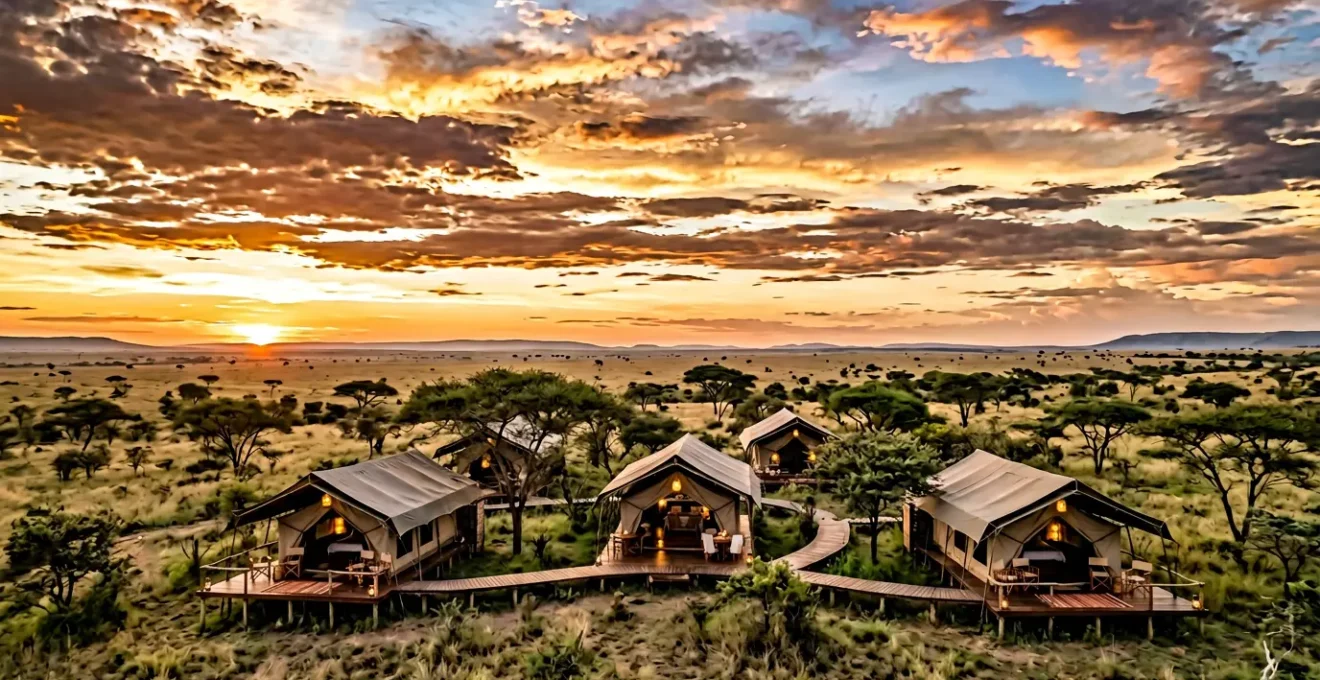
The secret to booking a high-demand safari isn’t just speed; it’s understanding the hidden system of inventory scarcity that governs every exclusive camp.
- Provisional bookings are temporary, courtesy holds (usually 1-2 weeks) that expire automatically, creating a high-stakes booking environment.
- Strict, non-refundable deposit policies are a direct result of the high operational costs and extremely limited room inventory in remote wilderness areas.
Recommendation: Use a qualified safari agent. They navigate this complex system, have access to reserved room blocks, and can manage your provisional holds to secure your ideal itinerary.
You’ve spent weeks researching the perfect safari. You’ve found the camp with breathtaking views and phenomenal game viewing. But next to the “Book Now” button, you see the dreaded words: “Only 2 rooms left.” A wave of anxiety hits. You need to coordinate with family, check flight availability, and confirm vacation time, but you fear the space will vanish. This is the central dilemma for every safari planner: how to secure your spot while you finalize the details. The common advice is simply to « book early, » but this overlooks the real issue.
The safari industry doesn’t operate like a city hotel with hundreds of identical rooms. It’s a delicate ecosystem built on trust, complex logistics, and extreme inventory scarcity. The key to navigating it successfully isn’t just about being quick; it’s about understanding the unique economic and operational realities that drive its booking processes. The concept of a « provisional booking » is at the heart of this system. It’s a powerful tool, but one with a very short fuse.
This guide will pull back the curtain on the safari booking world. We won’t just tell you what the rules are; we’ll explain *why* they exist. By understanding the logic behind strict cancellation policies, the rapid disappearance of peak-season availability, and the strategic advantage of using an agent, you can transform from an anxious planner into a confident traveler. You’ll learn to work *with* the system, not against it, to hold your dream trip while you put the final pieces of your adventure in place.
To help you master this process, this article breaks down the most pressing questions that safari planners face. From understanding cancellation fees to planning your travel flow, each section provides the insider knowledge you need to book with clarity and confidence.
Table of Contents: A Strategic Guide to Safari Booking Dynamics
- Why Are Safari Cancellation Policies So Strict Compared to City Hotels?
- Why Is It Impossible to Find Space in August if You Book in May?
- Do Waitlists for Popular Camps Actually Clear?
- Why Is It Often Harder to Book Camps Direct than Through an Agent?
- Why Must You Buy Travel Insurance the Moment You Pay the Deposit?
- Why Must You Book 12 Months in Advance for the Premier Camps?
- Where Does Your $1,500 Per Night Actually Go When You Sleep in a Tent?
- North to South or South to North: How to Flow Your Botswana Itinerary?
Why Are Safari Cancellation Policies So Strict Compared to City Hotels?
The primary reason for strict safari cancellation policies is a fundamental difference in business models driven by inventory scarcity. A city hotel might have 300 rooms; a remote safari camp often has fewer than 10. Each tent represents a significant portion of its potential revenue. A last-minute cancellation is not an inconvenience; it’s a major financial loss, as the chance of re-selling that specific room in a remote location on short notice is almost zero. These camps operate on a high-cost, low-volume model, with enormous overheads for logistics, staffing, conservation fees, and maintenance in the bush.
To protect themselves, lodges implement policies that demand commitment. The process typically involves a provisional booking, which is a temporary, no-obligation hold. Once you decide to confirm, a non-refundable deposit is required to secure your space. This financial commitment is essential for the lodge to guarantee your room, removing it from sale to other potential guests. For bookings during the busiest months, this can mean a 50% non-refundable deposit for peak season is required, locking in that precious inventory.
The fee structure is tiered and becomes progressively stricter as the departure date nears. While you might face no charge for cancelling more than two months out, penalties escalate sharply inside the 60-day window. It’s common to see a 40% penalty for cancellations between 15-35 days and a 100% loss for cancelling within the final days. This isn’t meant to be punitive; it directly reflects the vanishingly small probability that the camp can recover its lost revenue. This is why understanding these terms and having travel insurance is not just recommended—it’s a critical part of the planning process.
Why Is It Impossible to Find Space in August if You Book in May?
Attempting to book a popular safari camp in August by May is like trying to buy a concert ticket outside the venue minutes before the show starts: the best seats were sold long ago. This scarcity is a result of overlapping booking windows and the powerful tool of the provisional booking, or what can be called « the perishable hold. » Most safari bookings don’t start with a payment; they start with a travel agent or tour operator placing a temporary hold on rooms, flights, and activities.
This is where the timeline becomes critical. The most organized travelers, often working with agents, are planning their trips 12 to 18 months in advance. They place provisional holds on the best camps during peak season (like August). As this first wave of bookings is confirmed with deposits, a second wave of planners, perhaps 9 to 12 months out, snaps up the remaining availability. By the time May arrives, you are competing for the tiny fraction of inventory that might have been released from an expired provisional hold.
An excellent case study from Go2Africa’s booking process illustrates that these provisional holds are typically only valid for about two weeks. If a client delays their decision, the hold expires and the space is immediately released to the next person in the queue. Imagine hundreds of agents holding rooms for hundreds of clients across dozens of camps—all with different two-week expiry dates. This creates a complex, constantly shifting puzzle of availability that is nearly impossible to track as an individual, making last-minute planning for prime dates an exercise in frustration.
Do Waitlists for Popular Camps Actually Clear?
Yes, waitlists for popular safari camps absolutely do clear, and understanding the provisional booking system is the key to knowing why. A spot on a waitlist isn’t just a hopeful wish; it’s a strategic position to capitalize on the natural churn of the booking cycle. The most common reason a waitlisted traveler gets a room is the expiration of another traveler’s perishable hold. As mentioned, agents hold space for clients who are finalizing their plans. If that client hesitates for more than the typical 1-2 week hold period, or decides on a different itinerary, the rooms are automatically released.
An efficient agent will have you at the top of the queue, ready to immediately place a new provisional hold for you the moment that space opens up. This can happen at any time and requires swift action. A waitlist’s success is not about luck; it’s about being prepared. Other reasons for waitlists clearing include group booking adjustments, where a tour operator might release one or two unused rooms from a larger block, or personal cancellations due to unforeseen circumstances (which is why insurance is vital).
The key is to have a proactive partner managing your waitlist. They maintain a relationship with the camp’s reservations manager and can often get an early indication if space is likely to open up. While it can be nerve-wracking to wait, being on a waitlist for your first-choice camp while holding a confirmed booking at your second-choice camp is a common and effective strategy. It provides a safety net while keeping the door open for your dream location. The system is designed for this kind of strategic planning.
Why Is It Often Harder to Book Camps Direct than Through an Agent?
It seems counterintuitive: why would it be harder to book directly with the source? The answer lies in the safari industry’s unique « ecosystem of trust » and wholesale model. Premier safari camps are not just B2C (Business-to-Consumer) enterprises; they are primarily B2B (Business-to-Business) suppliers. Their main clients are not individual travelers, but a network of trusted tour operators and travel agents who buy rooms in bulk and understand the complex logistics of building an itinerary.
These agents often have contractual arrangements or pre-purchased blocks of rooms that are not visible in the lodge’s public-facing, direct booking system. When you call a lodge and they tell you they are full, it might be because their rooms are allocated to agents who have not yet filled them with specific clients. This is the agent’s inventory to sell. They act as the camp’s distributed sales force, and in return, the camp gives them preferential access and holds space for them. As one traveler noted after a daunting planning experience, « I provided my budget and Sara [the agent] did an amazing job putting together some packages…We communicated back and forth several times and eventually settled on a package. » This level of curation is the agent’s specialty.
Furthermore, agents are not more expensive. They work on a commission-only basis paid by the lodge *after* you travel. The price you pay is generally the same as the direct booking rate, but it comes with invaluable expertise. An agent is a logistical coordinator, like an air traffic controller for your vacation. They aren’t just booking a room; they are sequencing charter flights, ground transfers, and activities, ensuring your itinerary flows perfectly and saving you from the immense challenge of piecing it together yourself. This is why they have the access and the tools that an individual traveler often lacks.
Why Must You Buy Travel Insurance the Moment You Pay the Deposit?
Purchasing travel insurance isn’t the last step in booking a safari; it’s the first step after paying your deposit. The reason for this urgency is simple: most standard travel insurance policies only cover events that occur *after* the policy has been purchased. Your non-refundable deposit, which can be thousands of dollars, is at risk from the second you pay it. If a personal emergency, illness, or work conflict forces you to cancel your trip weeks or months before you’re scheduled to leave, you will lose that deposit unless you have a policy in place that provides pre-departure cancellation coverage.
The strict, tiered cancellation penalties of safari lodges make this protection non-negotiable. As African Safari Consultants states in their terms, the requirement is clear and direct for the traveler’s own protection:
You must purchase Trip Cancellation Insurance at or before the time of booking the tour, in order to be covered against any financial losses, in the event you are not able to do the trip, for whatever reason.
– African Safari Consultants, Terms and Conditions
Beyond simple cancellation, safari travel has unique risks that require specific coverage. You are often in extremely remote locations, and a medical issue that would be simple to handle at home could require a costly medical evacuation by air. Your insurance must explicitly cover this. Furthermore, your trip involves multiple components—internal charter flights, road transfers, different lodges—and a delay in one can have a logistical ripple effect on the rest. A robust policy protects you against these interconnected risks.
Action Plan: Your Safari Insurance Checklist
- Purchase insurance immediately upon paying your deposit to activate pre-departure cancellation coverage.
- Verify your policy includes a « Cancel For Any Reason » (CFAR) add-on for maximum flexibility against non-covered events.
- Ensure your medical evacuation coverage is at least $100,000 to handle emergencies in remote areas.
- Check that your policy explicitly covers safari-specific activities like game drives, walking safaris, or mokoro canoe trips.
- Confirm that coverage extends to disruptions involving internal flights and charter aircraft transfers, not just international legs.
Why Must You Book 12 Months in Advance for the Premier Camps?
Booking a premier safari camp a year or more in advance is not a suggestion; it is a necessity dictated by the confluence of high demand and severely limited supply. These top-tier lodges—known for their exclusive locations, exceptional guiding, and unique experiences—often have as few as 6 to 8 rooms. This is the definition of inventory scarcity. When you combine this tiny number of rooms with a globally recognized peak travel season (June to October), the competition becomes immense.
Safari experts consistently reinforce this timeline. For instance, for a high-end trip to Botswana, Extraordinary Journeys recommends travelers book 12 to 18 months out, especially for dates within the peak dry season. This long lead time is required not just for the rooms, but for the entire logistical chain. Premier camps are often accessed only by light aircraft, and the seats on these charter flights are booked up just as quickly as the rooms themselves. The best guides, who are as much of an attraction as the wildlife, are also assigned far in advance.
Furthermore, many travelers are planning their trips around specific, unmissable natural events. Whether it’s timing the Great Migration in the Serengeti, securing one of the few coveted gorilla trekking permits in Uganda, or being in the Okavango Delta during peak flood season, these events create intense demand spikes. Safari operators who specialize in these experiences see their inventory for premier lodges and associated charter flights evaporate well over a year ahead. If your heart is set on a specific camp or a particular wildlife spectacle, treating the booking process with a 12-to-18-month horizon is the only way to guarantee your place.
Where Does Your $1,500 Per Night Actually Go When You Sleep in a Tent?
The sticker shock of a luxury safari can be intense. Seeing a price tag of over $1,500 per person, per night for what is ostensibly a « tent » can be hard to reconcile. However, this price reflects the immense operational complexity and the all-inclusive nature of the high-cost/low-impact model that defines sustainable, remote tourism. You are not just paying for a bed; you are funding a massive logistical operation in the heart of the wilderness.
The largest costs are often hidden. A significant portion of your nightly rate goes towards conservation and community fees, which are essential for protecting the pristine environments you’ve come to see. Another major expense is logistics. Everything from the gourmet food and fine wine to the fuel for the vehicles and the linens for your bed has to be flown or trucked in over vast distances. As Extraordinary Journeys suggests, using a peak season average of $1,500-$2,000 per night, per person is a realistic starting point for budgeting a luxury Botswana trip, and the breakdown below shows why.
This table, based on an analysis of safari costs, provides a clear breakdown of where that money is allocated. It reveals that the « accommodation » itself is just one piece of a much larger, all-encompassing experience delivered in one of the world’s most remote and challenging environments.
| Safari Component | Approximate Daily Cost | What’s Included |
|---|---|---|
| Accommodation (Luxury Tented Camp) | $400-600 | Canvas suite with en-suite bathroom, daily housekeeping |
| Internal Flights/Transfers | $300-500 | Light aircraft between camps, airstrip transfers |
| Park & Conservation Fees | $100-150 | National park entry, community conservancy fees |
| All-Inclusive Services | $200-300 | All meals, selected beverages, laundry service |
| Game Activities | $150-250 | 2 game drives daily, walking safaris, mokoro trips |
| Staff & Operations | $200-300 | Expert guides, camp staff, logistics coordination |
Key Takeaways
- Safari booking is a high-stakes process governed by limited inventory and strict, expiring « provisional holds » (typically 1-2 weeks).
- Peak season (June-Oct) requires booking 12-18 months in advance, as top camps and charter flights are reserved by agents in waves.
- Using a specialized agent is a strategic advantage; they have access to reserved room blocks and can navigate the complex logistics at no extra cost to you.
North to South or South to North: How to Flow Your Botswana Itinerary?
Once you’ve secured your camps, the final strategic piece of the puzzle is ensuring your itinerary flows logically. In a country like Botswana, where travel between remote camps is almost exclusively by expensive light aircraft, the direction of your travel has significant financial and experiential consequences. A poorly planned route can result in backtracking, unnecessary layovers on dusty airstrips, and a logistical ripple effect that costs you both time and money. An inefficient route can easily add hundreds of dollars to your trip, as charter flights between camps can range from $300 to over $700 per person, per leg.
The goal is to create a seamless, one-way « flow. » The two most common and efficient routes in Botswana are North-to-South or South-to-North. A classic North-to-South itinerary might start in the Chobe National Park area (near Kasane airport), move down into the private concessions of the Linyanti or Khwai, and finish in the heart of the Okavango Delta before flying out of Maun. A South-to-North itinerary simply reverses this.
An expertly designed 10-day itinerary, for example, might begin in the Okavango Delta (flying into Maun), then move to the Khwai Community Area, and finish in Chobe National Park before an optional extension to Victoria Falls. This flow is logical, minimizes flight time, and often turns transfers into bonus game-viewing opportunities. The key is to think of your safari as a continuous journey, not a series of disconnected hotel stays. Your agent will work with the flight companies to build the most efficient « circuit » based on your chosen camps, ensuring you spend more time watching wildlife and less time waiting for a plane.
Now that you understand the intricate dynamics behind safari reservations, you are equipped to plan your journey with strategic insight. The next logical step is to partner with an expert who can navigate this system on your behalf, managing provisional holds and crafting an itinerary that maximizes your experience on the ground. Begin the conversation today to transform your dream safari from a plan into a reality.