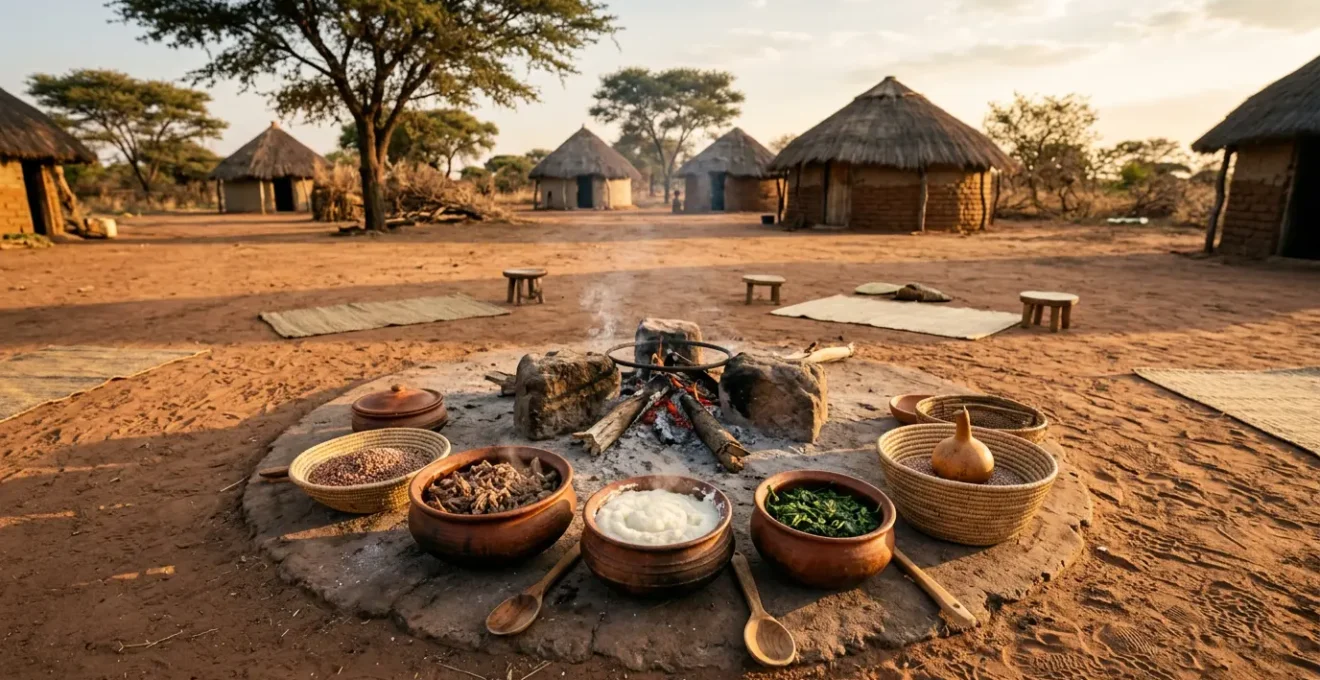
Tasting Botswana’s national dish, Seswaa and Pap, is about more than just food; it’s an immersion into a cultural ecosystem. This guide reveals how the open fire, foraged wild greens, and communal boma setting are the true ingredients that transform a simple meal into an authentic Tswana experience, connecting you directly to the heart of the nation’s heritage.
For the discerning foodie traveler, a trip to Botswana presents a delicious paradox. The safari lodges serve world-class cuisine, often featuring perfectly grilled steaks and familiar international dishes. Yet, there’s a nagging feeling that you’re missing something, a taste of the real, unvarnished soul of the country. You’ve heard whispers of « Seswaa » and « Pap, » the national dish, but the descriptions—slow-cooked meat and maize porridge—barely scratch the surface. You want to move beyond the Westernized menu and experience the authentic flavors that have nourished the Tswana people for generations.
Most guides will tell you what these dishes are, but they miss the most crucial element. The secret to understanding Botswana’s cuisine isn’t just in the ingredients on the plate; it’s in the entire culinary ecosystem surrounding them. It’s in the smoke of the cooking fire, the wisdom behind the foraged greens, and the profound social importance of sharing a meal under the stars. The real flavor of Botswana isn’t just tasted; it’s experienced through a rich tapestry of tradition, community, and connection to the land.
This guide will take you beyond the recipe. We will explore the central role of the fireplace in Tswana culture, uncover the secrets of local « superfoods » like Morogo, and understand the time-honored techniques for cooking in the wild. Finally, we’ll see how it all comes together in the boma, the true heart of social dining, to transform a simple meal into an unforgettable cultural highlight.
To truly appreciate this culinary journey, this article breaks down the essential elements of the traditional Tswana dining experience. The following summary outlines the key pillars we will explore, from the fire that cooks the food to the community that shares it.
Summary: Seswaa and Pap: A Guide to Botswana’s Culinary Traditions
- Why Is the Fireplace the Center of Tswana Dining Culture?
- Morogo: Why Is This Wild Spinach Considered a Superfood in Villages?
- How to Bake Bread in a Cast Iron Pot Buried in Hot Coals?
- St Louis or Chibuku: Which Local Beer Should You Try with Your Steak?
- Why Are Boma Walls Made of Reeds and Logs in a Circular Shape?
- How Do San Women Identify Edible Tubers in the Dry Sand?
- Why Is the Boma Dinner the Highlight of Social Life in a Safari Lodge?
- How Do Chefs Maintain Hygiene When Cooking Under a Tree?
Why Is the Fireplace the Center of Tswana Dining Culture?
In Botswana, the fireplace, or *leiso*, is far more than a place to cook. It is the gravitational center of the home and community—the hearth that is also the heart. Long before modern kitchens, the open fire was the source of warmth, light, and sustenance. It’s where stories are told, wisdom is passed down through generations, and the day’s events are shared. The crackling wood and glowing embers create a natural gathering point that fosters intimacy and connection, making the preparation of food a communal activity rather than a solitary chore.
This tradition is deeply embedded in the culture, extending beyond simple utility into the realm of social structure and spirituality. The traditional three-stone fire, for instance, carries symbolic weight. As cultural observer Sabina Wakesho explains regarding similar traditions:
The largest stone was for the head of the family, who is the grandfather. In case the father is deceased, the large stone would also be used as a means of communication
– Sabina Wakesho, Tuko.co.ke – Traditional Taita Taveta practices
This illustrates how each element of the cooking process can be imbued with meaning. While these traditional fires are the soul of village cooking, they are not without challenges; in some regions, reports show that safety concerns around traditional fireplaces are significant. In a modern safari lodge setting, this heritage is honored in the boma’s central fire pit, which provides the same unifying ambiance while ensuring safety. It remains the place where guests and guides connect, sharing the day’s safari tales as the aroma of slow-cooking Seswaa fills the air.
Morogo: Why Is This Wild Spinach Considered a Superfood in Villages?
While Seswaa and Pap form the foundation of a Tswana meal, it is Morogo that brings the flavor and nutritional power of the land to the plate. Morogo, also known as wild or African spinach, is not a single plant but a collective term for a variety of edible leafy greens foraged from the wild. These greens are a cornerstone of rural diets, revered for their robust taste and incredible resilience, often thriving where cultivated crops cannot.
Far from being a simple side dish, Morogo is a nutritional powerhouse. Its reputation as a « superfood » is well-deserved and backed by science. Many varieties contain an astonishingly high nutrient density. Some types of morogo leaves are known to have up to 36% protein content, making them a vital source of protein in largely plant-based diets. Furthermore, their mineral content often far exceeds that of commercially grown vegetables. For instance, specific research on wild greens has shown their remarkable superiority; a study on Basotho vegetables found that one variety contained 313.18 mg/100g of magnesium, dwarfing the 79 mg/100g found in commercial spinach.
The knowledge of how to harvest, prepare, and preserve Morogo is a treasured skill passed down, primarily through women. Because it is most abundant during the rainy season, traditional preservation is key to ensuring a year-round supply. This deep understanding of the local terroir—knowing which leaves to pick and when—is a perfect example of the culinary ecosystem at play.
Action Plan: Traditional Morogo Preservation Method
- Harvesting: Gather leaves during the rainy season when they are tender and nutrient-rich.
- Cleaning: Wash the leaves thoroughly in clean water to remove any soil and grit.
- Blanching: Briefly dip the leaves in boiling water for a minute or two to kill enzymes and preserve their vibrant green color.
- Drying: Spread the blanched leaves thinly on clean mats or racks in direct sunlight until they are completely dry and brittle.
- Storing: Once dried, store the Morogo in airtight containers or bags in a cool, dark place, where it can last for months.
How to Bake Bread in a Cast Iron Pot Buried in Hot Coals?
No traditional Botswana feast is complete without bread, but this isn’t your typical oven-baked loaf. Here, bread is made using a time-honored bush technique that transforms a simple dough into a culinary masterpiece: the *potbrood* (pot bread), baked in a three-legged cast-iron pot called a *potjie*. This method is a testament to the ingenuity of outdoor cooking, using the earth and embers as an oven.
The process is pure elemental magic. First, a simple bread dough is prepared and placed inside the greased potjie. The secret lies in heat management. The heavy, thick-walled cast-iron pot is a perfect vessel for this, as it distributes heat evenly and retains it for a long time. The lidded pot is then placed directly into a pit of hot coals and embers from the cooking fire. It’s not just set on top; it’s nestled in, with more hot coals and ash piled onto the flat lid. This creates a 360-degree oven effect, baking the bread from all sides simultaneously.
The result is a bread with a unique character that an electric oven could never replicate. The crust is wonderfully thick and crispy, often with a faint, smoky flavor from the fire. Inside, the crumb is incredibly soft, moist, and fluffy. Opening the heavy lid to reveal the perfectly golden-brown, domed loaf, with steam billowing out into the cool evening air, is one of the most satisfying moments of a boma dinner. This potbrood is the perfect vessel for soaking up the rich gravy of the Seswaa or enjoying with a knob of butter.
atmospheric heat > color contrast. »/>
This method demonstrates how essential tools and techniques, perfected over centuries, are central to the identity of Tswana cuisine. The potjie is not just cookware; it is a symbol of community and resourcefulness, capable of turning basic ingredients into a feast under an open sky.
St Louis or Chibuku: Which Local Beer Should You Try with Your Steak?
Just as wine pairing is an art in Western cuisine, choosing the right beer in Botswana can elevate your meal from good to great. The country’s beer landscape is dominated by two very different but equally beloved options: the clear, crisp St Louis Lager and the traditional, opaque sorghum beer, often known as Chibuku or « Shake-Shake. » Your choice depends entirely on the experience you’re seeking and what you’re eating.
St Louis is Botswana’s flagship commercial lager. It is a clean, refreshing, and accessible beer, similar in style to many international pilsners. Brewed with barley and hops, it has a familiar golden hue and a crisp finish, making it an excellent palate cleanser. It’s the go-to beverage for a sunny afternoon barbecue (*braai*) and pairs wonderfully with grilled meats. Its light body and carbonation cut through the richness of a fatty steak or a flame-grilled *boerewors* (sausage), making it a popular choice in urban areas and safari lodges.
On the other end of the spectrum is Chibuku. This is the true taste of traditional village life. Made from fermented sorghum or millet, it’s an opaque, thick, and yeasty brew with a distinctly sour taste. It’s often sold in a carton and famously needs to be shaken before drinking (hence the nickname « Shake-Shake ») to mix the sediment. With a lower alcohol content, it is more of a nourishing, food-like beverage and is deeply woven into the social fabric, served at weddings, funerals, and community gatherings. Its earthy, tangy flavor profile is an acquired taste for some, but it is the authentic pairing for slow-cooked, traditional dishes like Seswaa.
To help you choose, this comparison from observations of Botswana’s culinary scene breaks down the key differences.
| Characteristic | St Louis Lager | Chibuku (Shake-Shake) |
|---|---|---|
| Base Ingredient | Barley/Hops | Fermented Sorghum |
| Appearance | Clear, Golden | Opaque, Beige |
| Alcohol Content | 4-5% | 3-4% |
| Serving Style | Individual Bottles | Shared Carton |
| Cultural Context | Urban BBQs | Village Ceremonies |
| Best Paired With | Grilled Steak | Slow-cooked Seswaa |
Why Are Boma Walls Made of Reeds and Logs in a Circular Shape?
The *boma*, the traditional livestock enclosure that has been adapted into the iconic outdoor dining space of safari lodges, is defined by its distinctive structure: a circular wall made from natural, local materials. This design is not arbitrary; it’s a masterful blend of practicality, security, and social engineering that has been perfected over centuries. The choice of materials—typically tall reeds, sturdy logs, or packed branches—is a direct reflection of the environment, using what is abundant and readily available in the bush.
Historically, the primary function of a boma was protection. The high, sturdy walls were designed to keep valuable livestock safe from predators like lions and hyenas at night. The circular shape offers a significant defensive advantage: it eliminates corners where predators could hide or where weaker animals could be trapped. This 360-degree line of sight from the center allows for better vigilance and creates a unified, defensible perimeter. The single, easily secured entrance further enhances this security.
scale > cultural context. »/>
When adapted for dining, this circular design takes on a profound social dimension. By enclosing the space, the boma creates a sense of intimacy and seclusion from the vast, dark wilderness outside, making guests feel safe and cocooned. More importantly, the round shape is inherently communal. There is no « head » of the table; everyone seated around the central fire is an equal participant. This layout naturally encourages conversation and storytelling, enhancing the acoustic properties by focusing sound inward. It transforms a simple dinner into a shared, collective experience, embodying the Tswana value of community.
How Do San Women Identify Edible Tubers in the Dry Sand?
Long before agriculture, the indigenous San people of the Kalahari Desert mastered the art of living in harmony with a harsh environment. A crucial part of their survival and culinary heritage lies in their profound botanical knowledge, particularly the ability of San women to identify and unearth edible roots and tubers hidden beneath the dry sand. This skill is not magic; it’s a sophisticated science passed down through generations, representing a deep cognitive map of the territory and its subtle cues.
San women can locate these life-sustaining water sources and food by reading the landscape with an expert eye. They don’t look for the tuber itself, which is buried deep underground, but for the subtle, often tiny indicators on the surface. This might be a specific, nondescript-looking vine snaking across the sand, a particular type of leaf that only grows where a certain tuber is present, or a slight discoloration in the soil. They understand the complex relationships between different plants, knowing that one plant’s presence often signals another’s absence or proximity.
This indigenous knowledge is a vast, unwritten library of ecological information. Recent studies have tried to capture this disappearing wisdom. For example, research has documented 54 wild edible plants used by local communities, with roots and tubers being critical food sources during dry spells. This demonstrates an incredible level of environmental literacy. The process itself is one of patience and precision, using a simple digging stick to carefully excavate the tuber without damaging it, ensuring the plant can regenerate.
Preserving Indigenous Botanical Knowledge
Research conducted in several Botswana villages highlighted the vast, unwritten cognitive mapping of territory that links specific plant indicators to seasonal patterns. This knowledge of roots and tubers as crucial food sources during dry seasons is vital for food security. As researchers from the Discover Food Journal note, « Documentation of resources used in the indigenous diets are important for preservation of cultural heritage, biodiversity conservation, sustainability, and food systems resilience. » This work underscores the urgency of preserving this expertise before it is lost.
Key Takeaways
- The fireplace (leiso) is the social and spiritual core of Tswana dining, not just a cooking utility.
- Wild, foraged ingredients like Morogo are nutritionally superior to commercial equivalents and represent a deep connection to the land.
- The boma dinner’s circular design and central fire are intentionally crafted to foster a sense of security, equality, and community.
Why Is the Boma Dinner the Highlight of Social Life in a Safari Lodge?
The boma dinner has become the signature experience in nearly every safari lodge across Southern Africa, and for good reason. It transcends the act of simply eating a meal outdoors; it is a carefully orchestrated event that synthesizes all the elements of traditional Tswana hospitality into one unforgettable evening. It is the moment where the food, the fire, the stories, and the community converge, creating the highlight of social life for both guests and staff.
The magic begins with the atmosphere. As dusk settles over the bush, guests are led to the boma, where a roaring central fire pushes back the darkness and a canopy of stars emerges overhead. The circular reed walls create a sanctuary, a village within the wilderness. Here, the abstract concepts of Tswana dining become tangible. You can smell the smoky aroma of the Seswaa that has been simmering for hours, see the golden crust of the potbrood being lifted from the coals, and hear the rhythmic songs and dances that often accompany the meal. It is a full sensory immersion.
More than just a meal, the boma dinner is a bridge between cultures. It’s an opportunity for guests to interact with their hosts in a relaxed, informal setting. As one cultural observer notes, the boma dinner is valued for its role in preserving heritage, creating an authentic connection. A testimony on the cultural significance of communal dining highlights how it’s a time when traditional sorghum beer is brewed and enjoyed during social gatherings, linking guests directly to Botswana’s traditions. This is where you learn the proper way to eat pap with your hands, listen to guides share thrilling tales from the day’s safari, and learn the Tswana names for the constellations above.
atmospheric lighting > cultural authenticity. »/>
Ultimately, the boma dinner is the culmination of the entire culinary ecosystem. It brings together the slow-cooked food, the fire-side community, and the wild setting to create an experience that is both deeply authentic and profoundly human, leaving travelers with a taste of Botswana that lingers long after they’ve returned home.
How Do Chefs Maintain Hygiene When Cooking Under a Tree?
For a foodie traveler, the idea of cooking an entire feast outdoors, « under a tree, » can raise a valid question: how is hygiene maintained? In an environment of dust, insects, and wild animals, ensuring food safety is paramount. The answer lies in a combination of time-tested traditional practices and modern, common-sense protocols that bush chefs masterfully employ.
The first line of defense is water and heat. A designated hand-washing station is a non-negotiable feature of any bush kitchen setup. This is often a simple but effective system with a pitcher of clean water, a basin to catch the runoff, and soap. Everyone involved in food preparation is required to wash their hands meticulously and frequently. The fire itself is a powerful sterilizing tool. Cooking at high temperatures kills most pathogens, and utensils are often cleaned and then left near the fire to ensure they are completely dry and sterile before their next use.
Next is the principle of « a place for everything, and everything in its place. » A bush kitchen, though temporary, is highly organized. Food is never placed directly on the ground. Chefs use raised surfaces, clean mats, or portable tables for preparation. Ingredients are kept in sealed, animal-proof containers until they are ready to be used. Separate cutting boards and utensils are used for raw meat and vegetables to prevent cross-contamination. Once prepared, food is immediately covered to protect it from dust and insects. This systematic approach minimizes risks and ensures the meal is as safe as it is delicious.
Finally, there is an inherent cleanliness in the cooking methods themselves. Slow-cooking dishes like Seswaa in a sealed potjie for hours on end creates an environment where bacteria cannot survive. The entire process is a demonstration of expertise, proving that with knowledge and discipline, a world-class, hygienic kitchen can indeed exist anywhere, even under the sprawling branches of an Acacia tree.
So when you next find yourself under the African sky, don’t hesitate. Ask for the real taste of Botswana. Seek out the boma, share the stories, and discover the true flavor of the nation—a flavor that is so much more than what’s on the plate. Embrace the opportunity to connect with this rich culinary heritage.