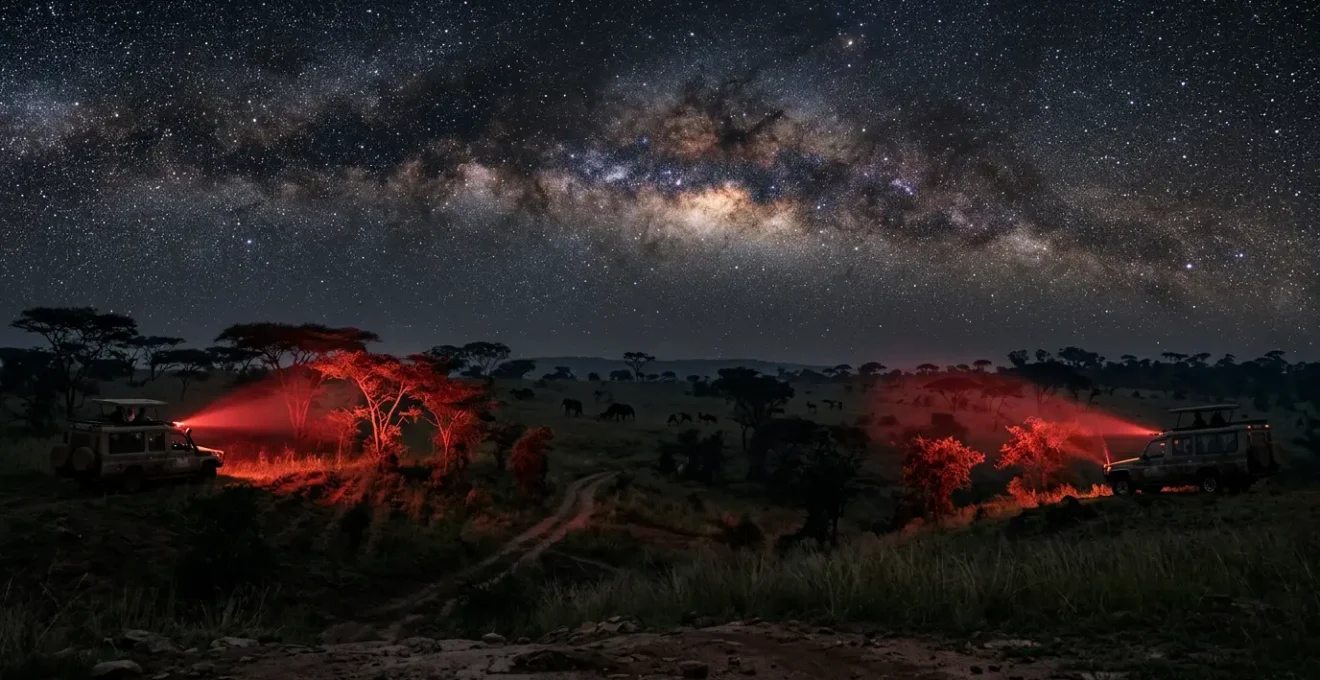
For the serious wildlife photographer, the frustration of national park « gate times » is a major barrier; the solution lies in understanding that private concessions operate on a fundamentally different conservation model based on exclusivity, not accessibility.
- National Parks must manage high visitor volumes with restrictive rules (like set hours and staying on roads) to minimize impact.
- Private concessions leverage low visitor density to offer operational freedom, including night drives, off-roading, and exclusive sightings.
Recommendation: Evaluate the higher cost of a concession not as an expense, but as a strategic investment in photographic freedom and access to unique nocturnal wildlife encounters.
For any dedicated wildlife enthusiast or photographer, the feeling is all too familiar. You’re at a phenomenal sighting as the golden hour bathes the landscape in perfect light, but a glance at your watch confirms the hard truth: you have to leave. National park gate times are non-negotiable. This rigid structure, forcing you back to camp just as the bush truly comes alive, can feel like a major creative and experiential constraint. The common advice is simply that « private concessions have fewer rules, » but this misses the crucial point.
The distinction between a national park and a private concession isn’t about arbitrary regulations; it’s about two fundamentally different philosophies of conservation and tourism. National parks are built on a model of public accessibility, which necessitates strict rules to manage high carrying capacity. Private concessions, often leased from communities or the state, operate on a model of high-value, low-volume tourism. This isn’t just about luxury; it’s a strategic choice that allows for a level of operational freedom impossible to replicate in a public park. For instance, a concession is typically unfenced and part of a larger ecosystem, whereas a private game reserve is often on privately owned, fenced land.
This article moves beyond the simple « rules vs. freedom » debate. We will dissect the operational and conservation models that dictate why you can venture out after dark in Botswana’s Okavango Delta concessions but must be back at camp in Chobe National Park. By understanding this trade-off between accessibility and exclusivity, you can make a more informed decision about whether the premium for a concession safari is a worthwhile investment for your specific goals.
This guide breaks down the key differences that define the premier safari experience, from off-road access and sighting ethics to the specific nocturnal creatures you can encounter when the park gates have long been closed.
Summary: Why Private Concessions Offer a Superior Safari Experience
- How Does Off-Roading Change Your Chances of Seeing Leopard Cubs?
- Why Do Concessions Limit Sightings to 3 Vehicles Maximum?
- Is the Conservation Levy in Private Concessions Worth the Extra $100/Day?
- What Nocturnal Species Can You Spot After the Sun Goes Down?
- Why Can You Walk Without a Rifle in Some Concessions but Not Others?
- Why Private Concessions in the Delta Allow Night Drives but National Parks Don’t?
- Why Can You See Aardvarks Only on Night Drives in Private Concessions?
- What Makes a « Premier » Game Drive Different from a Standard Park Tour?
How Does Off-Roading Change Your Chances of Seeing Leopard Cubs?
In a national park, the road network is fixed. If a leopard is spotted 200 meters away in dense brush, that’s where it stays: a distant, often obscured sighting. This is a necessary measure to prevent habitat destruction from thousands of vehicles. Private concessions, however, are managed for a tiny fraction of the visitors. This low-density model—sometimes with as little as one bed per 350 acres in conservancies like Kenya’s Mara North—allows guides the flexibility to drive off-road for significant sightings.
This freedom is a game-changer, especially for elusive predators like leopards. As one expert guide explains, the species’ very nature makes off-roading essential for quality viewing. In a statement on their nocturnal habits, the Wild Safari Guide notes:
The leopard is one of Africa’s most sought-after sightings, and while they are occasionally spotted during the day, they are primarily nocturnal hunters. These big cats rely on stealth, speed, and unmatched climbing ability to ambush their prey. Their rosette-patterned coats provide perfect camouflage in the moonlit savannah.
– Wild Safari Guide, Nocturnal Safari Animals in Africa
When a mother leopard has stashed her cubs in a secluded thicket or a rocky outcrop far from the main tracks, off-roading is the only way to get a respectful, clear view. Your guide can navigate the vehicle carefully to find the perfect angle without disturbing the animals, turning a fleeting glimpse into an intimate, 30-minute photographic session. This single advantage is often what separates a good safari from an unforgettable one.
Why Do Concessions Limit Sightings to 3 Vehicles Maximum?
Picture a lion kill in a popular national park. Within minutes, a dozen or more vehicles can converge on the scene, jostling for position. This creates stress for the animals and a frustrating, subpar experience for visitors. This is a direct consequence of the high-volume tourism model. Private concessions address this through a core principle of their operational philosophy: sighting ethics. The most common rule is a strict limit of two or three vehicles at any given sighting.
This isn’t just an arbitrary number; it’s a carefully managed protocol to ensure both animal welfare and guest experience. If a fourth vehicle arrives, it waits at a respectful distance until one of the others moves on. This system is only possible because of the incredibly low vehicle density. For instance, exclusive concession data shows that an area like Botswana’s Linyanti might have just 300 guests across 1.2 million hectares, which translates to an astonishing 4,000 hectares per person. With so much space, traffic jams at sightings are simply not an issue.
This commitment to quality over quantity transforms the nature of wildlife viewing. You have the time and space to observe natural behavior without a dozen other engines running. For a photographer, it means unobstructed sightlines and the ability to capture clean, impactful images that tell a story, rather than just documenting a crowded event.
Case Study: The Sabi Sand Vehicle Management Protocol
The private reserves of the Sabi Sand in South Africa are famous for their relaxed leopards, a direct result of decades of sensitive, ethical viewing. Lodges there strictly enforce a « two or three vehicles maximum » rule at any sighting. Guides communicate via radio to manage a queue system, ensuring that every guest gets a front-row seat without overwhelming the animals. This protocol is a cornerstone of their conservation model and is responsible for the unparalleled quality of wildlife encounters in the region.
Is the Conservation Levy in Private Concessions Worth the Extra $100/Day?
The sticker shock of a private concession safari is undeniable, with daily conservation levies often adding a significant amount to the total cost. It’s easy to question the value of this fee, but it’s crucial to understand where this money goes. Unlike a national park’s generalized entry fee, which is absorbed into a large governmental budget, a concession’s levy is a direct and targeted investment into the immediate ecosystem and its surrounding communities. It is the engine that powers the entire high-value, low-volume conservation model.
These funds are not just for profit. A significant portion is funneled directly into on-the-ground conservation work. This includes funding for anti-poaching units that protect the very animals you’ve come to see, financing for vital wildlife research projects, and maintaining the habitat. Furthermore, a core component of the concession model is partnership with local communities. The lease fees and tourism revenues provide direct employment, support local schools and clinics, and create a powerful economic incentive for communities to protect wildlife rather than see it as a competitor for resources like grazing land.
Essentially, the levy transforms you from a passive tourist into an active stakeholder in the conservation of the area. It ensures that the ecosystem remains pristine and that the benefits of tourism are shared with the people who live alongside the wildlife. While the upfront cost is higher, it directly funds the exclusivity, pristine habitat, and ethical practices that make the experience possible.
Action Plan: Tracing Your Conservation Levy’s Impact
- Habitat Protection: Your fees directly contribute to the lease payments that keep the land designated for wildlife, preventing conversion to agriculture or other uses.
- Anti-Poaching Support: A major portion funds ranger salaries, equipment, and patrols, forming the front line of defense for rhinos, elephants, and other vulnerable species.
- Community Empowerment: The revenue provides stable local jobs in guiding, hospitality, and management, fostering a positive relationship between communities and conservation.
- Wildlife Research: Levies often support collaring programs, population counts, and ecological studies that inform long-term conservation strategies.
- Sustainable Operations: The funds help maintain the low-impact infrastructure of the lodge and its vehicle fleet, ensuring the tourism footprint remains minimal.
What Nocturnal Species Can You Spot After the Sun Goes Down?
Once the sun sets, the African bush transforms. A whole new cast of characters emerges from burrows and dense thickets, and the air fills with different sounds. This is the world that visitors to national parks miss entirely. Night drives in private concessions offer a rare window into this secret, nocturnal realm. Armed with a powerful spotlight—often with a red filter to minimize disturbance—your guide will search for the glint of eyes in the darkness.
While you might see crepuscular animals like lions and hyenas becoming more active, the real prize is the cast of uniquely adapted nocturnal specialists. These are creatures so shy and elusive they are almost legendary. The list includes the genet, a slender, cat-like creature; the civet, a stocky and secretive omnivore; and the springhare, which looks like a cross between a rabbit and a kangaroo. A report in National Geographic on the rise of « noctourism » highlights the most coveted of these sightings:
In South Africa’s Kalahari, Tswalu is a prime place to see animals on both Africa’s Shy Five and Secret Seven lists. The Shy Five, also called the Elusive Five in Tswalu, are the aardvark, aardwolf, bat-eared fox, brown hyena, and pangolin.
– National Geographic
Sighting any of these is a true safari highlight. The aardwolf, a specialized termite-eater related to the hyena, and the pangolin, the world’s only scaled mammal, are among the most difficult animals to find. Night drives don’t guarantee a sighting, but they are quite literally the only chance you will ever have to see them. In some dedicated reserves, the results can be astonishing; a recent wildlife survey at one such location documented sightings of 14 aardvarks and five aardwolves, a testament to what’s possible after dark.
Why Can You Walk Without a Rifle in Some Concessions but Not Others?
A walking safari offers an unparalleled level of immersion. Following tracks, learning about medicinal plants, and experiencing the bush on foot is a profoundly different experience from being in a vehicle. However, the regulations governing this activity are strict and directly tied to safety. The title’s premise—walking *without* a rifle—is only possible in a very specific context: a concession or reserve that does not have dangerous game, such as certain properties in South Africa’s Waterberg.
In any area that is home to the Big Five (lion, leopard, elephant, rhino, buffalo), walking without an armed and certified guide or ranger is not only forbidden but extremely dangerous. The rules are in place for your protection. The nuance lies in how different locations manage this. Some national parks in Tanzania and Zambia have designated zones where walking safaris are permitted, but they are always led by an armed ranger employed by the park authority.
In a private concession, walking safaris are often a signature activity. Because the lodge directly employs its own highly trained guides—many of whom have advanced rifle handling and walking guide qualifications—they can offer this experience with more flexibility. They are not bound by a park authority’s schedule and can decide the best time and place for a walk based on animal movements and guest interests. However, the core safety principle remains: in a Big Five area, a qualified, armed guide is always required. The « freedom » of the concession is in its ability to offer the activity seamlessly as part of its daily program, not in circumventing essential safety protocols.
Why Private Concessions in the Delta Allow Night Drives but National Parks Don’t?
The core reason private concessions can offer night drives while national parks cannot is a simple matter of logistics and impact management, rooted in their opposing tourism models. National parks are public assets mandated to provide access to a large number of people. This high visitor volume, sometimes involving hundreds of vehicles a day, creates significant pressure on the ecosystem. To mitigate this, parks must enforce a « common denominator » set of rules: fixed gate times and designated roads. Allowing night drives in this environment would be chaotic and unsustainable, leading to wildlife disturbance and safety risks on a massive scale.
Private concessions, by contrast, are built on a foundation of low-density, controlled tourism. They host a very small number of guests, allowing for a much more flexible and sustainable operational approach. With only a handful of vehicles operating across a vast area, the impact of after-dark activities is negligible. This fundamental difference is the key to understanding the regulatory divide.
The following table, based on an analysis of after-dark safari policies, clearly breaks down the permissions and the reasoning behind them.
| Location Type | Night Drive Status | Reason |
|---|---|---|
| National Parks | Vehicles required back by dark | Heavy visitor numbers require restrictive policies for wildlife protection |
| Private Concessions | Operate low-density tourism and offer night drives | Limited guests allow sustainable after-dark activities |
| Exceptions | Etosha and Kruger offer ranger-led night drives | Controlled park-operated programs only |
As the table shows, there are rare exceptions where national parks like Etosha in Namibia or Kruger in South Africa offer night drives. However, these are highly controlled, large-group activities operated by the park itself, lacking the intimacy and flexibility of a concession drive. They are a compromise, not a true equivalent.
Why Can You See Aardvarks Only on Night Drives in Private Concessions?
The aardvark is the holy grail for many seasoned safari-goers. This bizarre and utterly unique creature, with its pig-like snout, rabbit-like ears, and powerful, kangaroo-like tail, is a master of the nocturnal world. Sighting one is a career highlight for many guides, let alone their guests. The reason they are almost exclusively seen on night drives in private concessions comes down to their biology and the limitations of national parks.
Aardvarks are strictly nocturnal. They spend their days in deep, self-dug burrows to escape the African heat and potential predators. They emerge only under the complete cover of darkness to forage for their sole food source: ants and termites. As experts from Londolozi, a private reserve famed for its sightings, explain, your chances during the day are virtually zero.
The aardvark is and will continue to be one of the most elusive animals we have the potential of seeing at Londolozi and throughout South Africa. Aardvarks are nocturnal creatures. They sleep in burrows during the day and mostly emerge at night to search for food. This means that unless you are on a night drive, you are unlikely to see one.
– Patrick, Londolozi Blog
Since national park visitors must be back in camp by dusk, their window of opportunity is closed before an aardvark even considers waking up. Only in a private concession, where guides can stay out for hours after sunset, does the possibility of an encounter even exist. Finding one requires skill, luck, and patience—scanning the landscape with a spotlight for its distinctive shape as it digs furiously into a termite mound, consuming tens of thousands of insects with its sticky, 30 cm-long tongue. This is safari on expert mode, and it’s an experience only a concession can provide.
Key Takeaways
- The rules of a safari are not arbitrary; they are defined by the location’s core conservation model (volume vs. value).
- Operational freedoms like off-roading and night drives are a direct result of the low visitor density in private concessions.
- The higher cost of a concession directly funds on-the-ground conservation, community partnerships, and the ethical standards that create a superior experience.
What Makes a « Premier » Game Drive Different from a Standard Park Tour?
The term « premier game drive » is more than just marketing; it represents a qualitative shift in the safari experience, born from the operational freedoms of a private concession. It is the synthesis of all the advantages we’ve discussed, creating an outing that is more flexible, intimate, and ultimately more rewarding than a standard tour in a national park. It’s about moving from being a passive spectator to an active participant in the bush’s daily drama.
A standard park tour is defined by its constraints: you must stick to the road, adhere to gate times, and often share sightings with numerous other vehicles. A premier game drive, in contrast, is defined by its flexibility. Your day isn’t dictated by a clock, but by the rhythm of the wild. As the team at Hideaways Africa puts it, « In private concessions, your day can bend with whatever the bush offers. » If you’re at a fascinating sighting of wild dogs on a hunt, your guide has the autonomy to stay with them, even if it means dinner is a little late.
This flexibility extends to every aspect of the drive. Guides can position the vehicle for the best possible light and angle for photography, a freedom often highlighted by experts. As noted by one travel specialist, « Guides can take you closer to the best sightings, allowing you to put away that zoom lens. » This ability to go off-road, the guarantee of exclusive sightings, and the freedom to explore after dark all combine to create a deeply personal and immersive journey. It’s the difference between seeing a leopard from 100 meters away and watching it from 20 meters as it stalks its prey in the moonlight.
For the photographer or wildlife enthusiast who has felt the constraints of park rules, the choice becomes clear. The premier experience offered by a private concession is not an indulgence, but a strategic tool. It is an investment in time, access, and quality that pays dividends in the form of unparalleled wildlife encounters and the photographs of a lifetime.