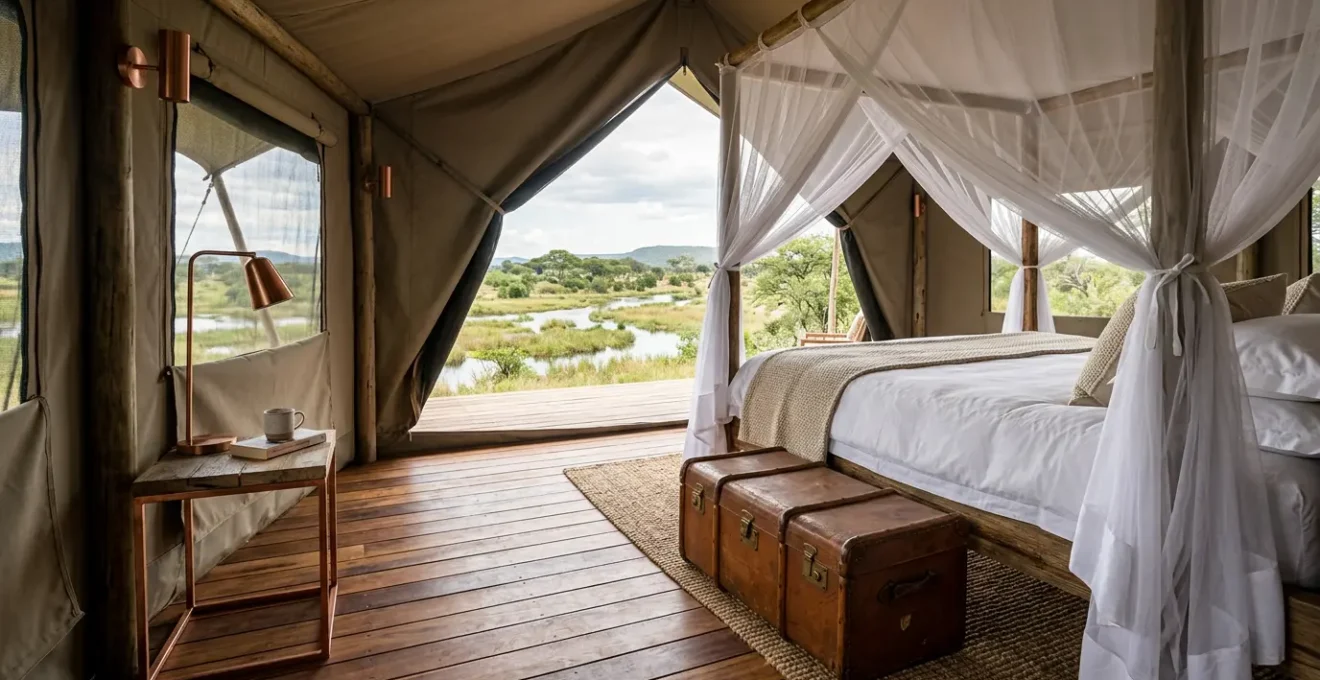
A high-end Botswana safari’s price tag is a direct reflection of its investment in unparalleled privacy, seamless logistics, and active conservation, not just accommodation.
- The cost subsidizes a low-density tourism model, guaranteeing exclusive access and minimal human contact in vast private concessions.
- It covers complex logistics, including charter flights to remote camps, highly trained staff, and eco-friendly operations like solar power.
Recommendation: View the cost not as an expense, but as the price of entry for a truly frictionless and exclusive wilderness experience that cheaper destinations cannot replicate.
When comparing premier travel destinations, the sticker shock of a Botswana safari often gives even the most seasoned high-net-worth traveler a moment of pause. A figure exceeding $10,000 for a week in the wilderness seems steep, especially when destinations like Kenya or Tanzania offer safaris for a fraction of the price. This leads to a critical question: is the value commensurate with the cost? The common answer points to a « low-volume, high-cost » tourism model, but this only scratches the surface. It fails to articulate the tangible assets you are acquiring with this investment.
The reality is that the premium is not merely for a more luxurious tent or better food. It is a strategic payment for eliminating what I call « logistical friction »—the small and large hassles that can dilute a pure travel experience. It’s an investment in a guaranteed level of privacy that has become the ultimate modern luxury. More than that, it’s a direct contribution to a « conservation dividend, » ensuring the very ecosystem you’ve come to witness remains pristine and thriving for generations.
This isn’t about spending more; it’s about buying a fundamentally different, and superior, product. This guide deconstructs that $10,000 figure, moving beyond the platitudes to show you precisely where your money goes. We will explore the critical differences between public parks and private concessions, outline the nuances of service and packing, and provide the insider knowledge needed to understand why Botswana represents the pinnacle of the safari experience—an investment in an experience-as-an-asset that pays dividends in memory and exclusivity.
To fully grasp the architecture of this premier experience, this analysis will break down every key component of the cost and value proposition. The following sections provide a transparent look into the mechanics of a luxury Botswana safari, empowering you to make an informed investment decision.
Summary: The True Cost and Value of a Botswana Luxury Safari
- Where Does Your $1,500 Per Night Actually Go When You Sleep in a Tent?
- National Park vs. Private Concession: Which Offers Better Privacy for VIPs?
- What to Pack for a Luxury Safari Where Laundry Is Done Daily?
- Butler Service in the Bush: What Can You Really Ask For?
- How to Space Out Activities to Avoid Safari Fatigue by Day 4?
- Outdoor Showers vs. Copper Bathtubs: What to Expect in a Tented Bathroom?
- The 3 Behaviors That Will Make Your Fellow Safari Guests Hate You
- Provisional Bookings: How to Hold Safari Space While You Decide?
Where Does Your $1,500 Per Night Actually Go When You Sleep in a Tent?
The nightly rate of a luxury Botswana camp can be confronting. When daily costs range from $650 to $1,500 per person per day, it’s essential to understand this is an all-inclusive investment in seamless logistics, not just a bed. The price tag is a function of overcoming immense « logistical friction. » These camps operate in some of the most remote, inaccessible locations on earth, and your fee directly subsidizes this complexity. A significant portion covers the charter flights required to reach these pristine areas, with each leg costing hundreds of dollars.
Furthermore, the cost supports an entire ecosystem of highly trained personnel, from expert guides and trackers to chefs and maintenance staff, who live on-site for extended periods. It includes not just your gourmet meals and drinks, but also the specialized activities that define the experience, like mokoro (dugout canoe) excursions and guided walking safaris. These are not add-ons; they are integral parts of the daily rate.
Most importantly, a substantial part of your fee is a direct conservation dividend. This includes national park fees and, more significantly, the operational costs of maintaining vast private concessions. The high price enables significant investment in protecting the pristine environment and its wildlife, funding anti-poaching units and community development programs. In essence, your stay is an active participation in a sustainable conservation model that ensures the wilderness remains wild. It’s the price of entry to an environment kept deliberately untouched by mass tourism.
National Park vs. Private Concession: Which Offers Better Privacy for VIPs?
For a discerning traveler, the ultimate luxury is not thread count, but space. This is where the distinction between a National Park and a Private Concession becomes the most critical factor in justifying Botswana’s premium. While National Parks like Chobe are magnificent, they are open to the public, meaning you share sightings with numerous other vehicles and must adhere to strict operating hours. For a VIP, this is a compromise on the core asset: privacy.
Private concessions, which form the heart of Botswana’s luxury circuit, offer a fundamentally different product. These are vast tracts of land leased from the government or local communities by a single safari operator. They enforce a strict limit on the number of guests and vehicles allowed, creating an incredibly low « privacy density. » It’s common to go on a game drive and not see another vehicle for hours. As the experts at Wilderness Destinations note, this provides something invaluable:
Botswana’s private concessions offer something increasingly rare in our crowded world: space. With strict limitations on bed numbers and vehicle density, these vast private reserves ensure you’ll rarely encounter other visitors during your game drives.
– Wilderness Destinations, Wilderness Botswana Safari Guide
This exclusivity allows for experiences impossible in a national park. Guides can drive off-road to track a leopard, conduct night drives to find nocturnal animals, and lead intimate walking safaris. You are not a spectator on a schedule; you are an explorer with the freedom to follow the rhythm of the wild, as this direct comparison of features clearly illustrates.
| Feature | National Parks | Private Concessions |
|---|---|---|
| Vehicle limits | Multiple vehicles allowed | 1-2 vehicles per sighting |
| Operating hours | Sunrise to sunset only | 24-hour access |
| Off-road driving | Not permitted | Allowed for tracking |
| Night drives | Prohibited | Standard offering |
| Walking safaris | Limited or not allowed | Freely available |
What to Pack for a Luxury Safari Where Laundry Is Done Daily?
One of the first signs of a truly high-end safari experience is the guidance on packing: bring less. While it may seem counterintuitive for a major trip, the logistical support at premier Botswana camps makes overpacking unnecessary and impractical. The key is understanding the two main constraints: daily laundry service and strict luggage limits on bush flights. Light aircraft transfers are a core part of the logistical chain, and they mandate soft-sided bags (no wheels or hard frames) with a total weight limit of around 20 kg (44 lbs), including all hand luggage and camera equipment.
This isn’t a limitation but a liberation. With complimentary daily laundry service, you only need clothing for three to four days. The ethos is about packing smart, not packing a lot. Focus on lightweight, neutral-colored clothing (khaki, beige, olive) that can be layered. Bright colors and white are discouraged as they can startle wildlife. Your packing list should prioritize function and comfort over volume.
Furthermore, the best lodges remove the need to pack many essentials. They typically provide professional-grade binoculars for each guest, eliminating the need to bring your own bulky optics. High-quality, eco-friendly insect repellent, premium toiletries, rain ponchos for unexpected showers, and insulated water bottles are also standard amenities. The high cost of the safari translates into a curated convenience where every need is anticipated, allowing you to focus on the experience, not the contents of your suitcase. Packing light becomes the ultimate statement of luxury.
Butler Service in the Bush: What Can You Really Ask For?
The concept of a « butler » in a remote tented camp can seem abstract. It’s not about white gloves and silver platters; it’s about a highly intuitive, personalized service that anticipates your needs and curates your experience. Your butler is your primary point of contact at the lodge, acting as a seamless interface between you and the camp’s operations. So, what can you really ask for? The answer is: almost anything that enhances your comfort and personalizes your stay.
On a practical level, this includes handling your daily schedule. Do you want your morning coffee or tea delivered to your tent at 5:30 AM with the wake-up call? It will be there. Prefer to have a private dinner on your deck under the stars instead of joining other guests? Your butler will arrange it. They can draw a bath for you—often in a stunning outdoor or copper tub—to be ready upon your return from a dusty game drive. They are also your liaison for any specific dietary requirements, ensuring the chef is aware of your preferences or restrictions for every meal.
Beyond the practical, a great butler adds layers of surprise and delight. They might notice you enjoy a particular gin and ensure a private sundowner bar is set up for you at a scenic spot, complete with your favorite drink. They can have your muddy boots cleaned without you asking or unpack your luggage upon arrival so you can immediately relax. This is not about being demanding; it’s about engaging with a service designed to remove every minor point of friction from your day. The role of the butler is to ensure your time is spent entirely on experiencing the magic of the bush, not on managing the logistics of your stay.
How to Space Out Activities to Avoid Safari Fatigue by Day 4?
The temptation on a first-time luxury safari is to do everything. Early morning drives, afternoon drives, night drives, walking safaris—the schedule can quickly become relentless. This often leads to what is known in the industry as « safari fatigue, » a state of exhaustion that can set in by the fourth day, dulling the magic of the experience. The high price of a Botswana safari buys you not just activities, but the luxury of curated downtime and a flexible pace.
The key is to work with your private guide to build a rhythm that balances adventure with relaxation. A great guide is more than a wildlife expert; they are a « pace-setter. » As the experts at Ker & Downey point out, this is a crucial skill:
Leveraging your private guide as a ‘pace-setter’ is key. The guide can read the group’s mood and suggest a shorter drive, a later start, or swapping a drive for a gentle mokoro trip.
– Ker & Downey Safari Experts, Luxury Safari Planning Guide
Instead of two long game drives every day, consider swapping an afternoon drive for time at the lodge’s pool, a spa treatment, or simply reading on your private deck while watching wildlife come to you. Mixing modalities is also crucial. Alternating a vehicle-based safari with a silent mokoro ride through the Delta’s channels or a thrilling helicopter excursion provides a fresh perspective and uses different energy levels. The goal is to return home invigorated, not depleted. A well-paced itinerary, designed in consultation with your guide, ensures that every moment, whether active or restful, is a highlight.
Your Action Plan: Pacing for Peak Safari Enjoyment
- Mix Modalities: Alternate high-energy game drives with quiet water activities like mokoro rides or boat trips to engage different senses.
- Schedule Stillness: Intentionally block out « private deck time » in your itinerary to enjoy the camp’s amenities and watch for wildlife without a vehicle.
- Vary the Routine: Swap a standard game drive for a cultural village visit or a guided bush walk to break the pattern and connect with the environment differently.
- Embrace Flexibility: On some days, opt for a shorter morning drive to allow for a later, more relaxed start or a longer brunch.
- Gain Perspective: Incorporate a helicopter or light aircraft excursion mid-trip to see the landscape from above and rest from ground-level travel.
Outdoor Showers vs. Copper Bathtubs: What to Expect in a Tented Bathroom?
The bathroom in a luxury Botswana tented suite is a masterclass in blending rustic romance with sophisticated engineering. It shatters any preconceived notions of « camping. » You are not sacrificing comfort; you are gaining an immersive connection to nature without compromising on modern amenities. The quintessential features are often a freestanding copper bathtub and a private outdoor shower, each offering a unique way to experience the wilderness.
The outdoor shower is a signature element, allowing you to wash off the day’s dust under the vast African sky, with the sounds of the bush around you. It’s an exhilarating experience of complete privacy combined with total immersion. The freestanding copper or stone bathtub, often positioned with a panoramic view of the floodplain or savanna, offers a different kind of indulgence. Soaking in a warm bath while watching elephants graze in the distance is a moment of profound tranquility that defines the luxury safari.
What makes this possible in such remote locations is a testament to the investment behind the scenes. These lavish water features are supported by sophisticated and sustainable infrastructure. For instance, many eco-conscious camps rely on 100% solar-heated water systems and advanced, environmentally friendly wastewater treatment plants. This ensures that your indulgence has a minimal ecological footprint. The bathroom is therefore not just a facility; it’s a core part of the experience, designed to connect you to the environment in the most intimate and luxurious way possible, all while upholding a deep commitment to sustainability.
Key Takeaways
- The high cost of a Botswana safari directly funds a low-density, high-privacy tourism model that is impossible to replicate in cheaper destinations.
- A significant portion of the fee covers complex logistics (charter flights, remote staffing) and acts as a « conservation dividend » for environmental protection.
- Luxury is defined by what is removed (crowds, logistical friction, packing stress) and what is added (exclusive access, personalized service, flexibility).
The 3 Behaviors That Will Make Your Fellow Safari Guests Hate You
A luxury safari’s high price point serves an unstated but crucial purpose: it curates the clientele. It tends to attract guests who understand discretion and respect the immersive, often contemplative, nature of the experience. As one expert puts it, « The high price itself is designed to curate a certain type of guest—one who understands discretion, respects the experience, and values quiet contemplation over loud tourism. » However, even in this refined environment, a few breaches of unspoken etiquette can quickly sour the atmosphere for everyone in the shared safari vehicle.
First and foremost is monopolizing the guide. While your guide is a font of knowledge, peppering them with a constant stream of questions, especially during a sensitive wildlife sighting, prevents others from enjoying the moment and hearing the guide’s planned insights. A good approach is to save non-urgent questions for quieter moments during the drive or back at camp.
Second is a lack of spatial awareness in the vehicle. This includes constantly standing up to get a better photo, blocking the view for those behind you, or making sudden movements that can startle both the wildlife and your fellow passengers. The established etiquette is to remain seated and be mindful of everyone’s line of sight. Most guides will reposition the vehicle to ensure everyone gets a good view. Finally, there is noise discipline. This means avoiding loud conversations, putting your phone on silent, and—critically—resisting the urge to use the continuous shutter (motor drive) on your camera during quiet, intimate sightings. The « machine-gun » sound of a DSLR can ruin a serene moment with a sleeping leopard or a shy antelope.
Other common faux pas include being late for morning game drives, which delays the entire group, and failing to rotate seats in the vehicle over several days. Adhering to these simple, unspoken rules ensures a harmonious experience for all, upholding the very atmosphere of respectful exclusivity that everyone has invested in.
Provisional Bookings: How to Hold Safari Space While You Decide?
The high demand and limited availability of Botswana’s top-tier lodges require a unique booking approach. Given the significant investment and the need to coordinate complex itineraries, you cannot simply book online. The process operates on a high-trust system of « provisional bookings » or « holds. » This is a crucial piece of insider knowledge that allows you to secure space while you finalize your plans.
A provisional booking is essentially a temporary, no-obligation hold on rooms and activities for a specific set of dates. As a luxury travel consultant, this is the tool I use to pencil in an entire itinerary for a client. This gives you time to review the proposal, coordinate with your travel partners, and make a decision without the pressure of losing your spot. These holds are typically valid for a set period, often a few weeks.
Because the best camps are small and exclusive, it is essential to plan far in advance. For travel during peak season (June to October), safari specialists recommend you book 12 to 18 months out. What happens if another guest wants to confirm the dates you are holding? You will be given a « right of first refusal, » usually with a 24-48 hour window to either confirm your booking with a deposit or release the space. There are typically no penalties for releasing a provisional booking. This system is a hallmark of the luxury safari industry, built on relationships and designed to provide discerning clients with the flexibility needed to craft the perfect journey.
Understanding the architecture of a Botswana safari’s cost is the key to appreciating its value. It is an investment in an ecosystem of exclusivity, service, and conservation. To take the next logical step and see how these principles can be applied to your own journey, the ideal approach is to begin crafting a personalized itinerary that reflects your specific desires for adventure and comfort.
Frequently Asked Questions about Botswana Safari Logistics
What’s the luggage weight limit for bush flights?
Soft-sided bags (with no wheels or hard shells) are essential due to small aircraft luggage hold restrictions. There is a strict total weight limit of 20 kg (44 lbs) per person, which includes all hand luggage and camera gear.
How far in advance should I book a Botswana safari?
Given Botswana’s smaller selection of lodges compared to other destinations, we recommend travelers book 12 to 18 months in advance, especially if the desired dates fall within the peak season (June to October).
What happens if someone else wants my provisional booking?
Most operators use a ‘right of first refusal’ system. If another party wants to confirm the dates you have on a provisional hold, you will be contacted and given 24-48 hours to either confirm your booking with a deposit or release the space.
Are there penalties for releasing a provisional booking?
Typically, there are no financial penalties for releasing a provisional booking. This is part of the high-trust model of the luxury safari industry, allowing flexibility during the planning phase. Penalties only apply once a booking is formally confirmed.